
Watch
The Grammar of Design: What Makes Grand Seiko Unique

Apr
The Grammar of Design: What Makes Grand Seiko Unique
In 1967, a young Seiko designer named Taro Tanaka wrote a set of rules that would define Grand Seiko for the next sixty years. Four principles. No exceptions. Every surface flat. Every angle sharp. Every case unique. He called it the Grammar of Design — and it’s the reason a Grand Seiko from 1967 looks just as intentional as one made yesterday.
Understanding the Grand Seiko Grammar of Design isn’t optional for collectors — it’s the entire point. Without it, you’re buying a well-made Japanese watch. With it, you’re buying into a philosophy that treats watchmaking as sculpture. As we explore in our history of Grand Seiko’s golden era, the 44GS wasn’t just a watch — it was a manifesto.
The Four Principles of Taro Tanaka
Tanaka’s Grammar of Design boils down to four non-negotiable rules:
These rules sound simple, but executing them requires a finishing technique so demanding that only a handful of craftspeople at Seiko’s Shizukuishi studio can perform it. That technique is zaratsu polishing.
Zaratsu Polishing: The Soul of Grand Seiko
Zaratsu is a Japanese adaptation of a German technique (originally “Sallaz” polishing) that creates perfectly flat, distortion-free surfaces. The craftsperson holds the case component against a rotating tin plate at precise angles — there are no guides, no jigs, just years of muscle memory.

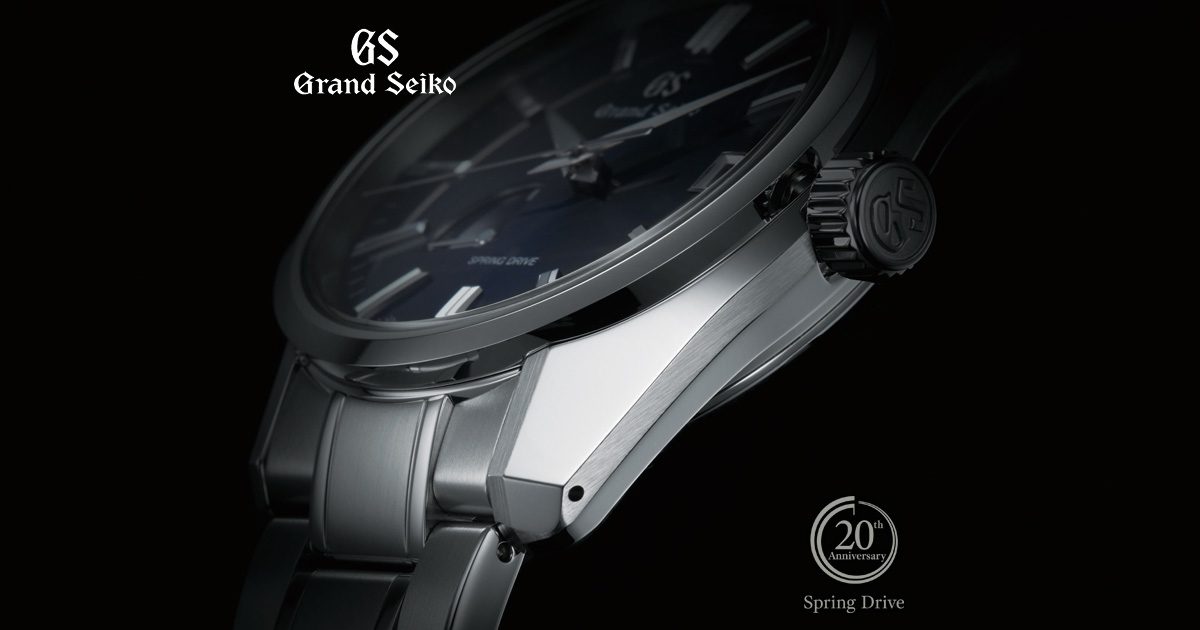
The result is a surface that reflects light like a mirror — but not the convex, slightly distorted mirror of a typical polished watch case. A zaratsu surface is mathematically flat. When you rotate a Grand Seiko in your hand, light plays across the surfaces in sharp, defined transitions between polished and hairlined planes. This interplay — called “the play of light” by Grand Seiko — is the visual signature that separates a Grand Seiko from everything else.
This technique is what makes the vintage First Grand Seiko and the 61GS Hi-Beat in our collection so special — these aren’t just old watches, they’re early examples of zaratsu mastery.
The 44GS: Where It All Began
The Grand Seiko 44GS, introduced in 1967, was the first watch to fully embody Tanaka’s Grammar of Design. Produced by Daini Seikosha (Seiko’s second factory) for only two years, the 44GS is considered the blueprint for every Grand Seiko that followed.
Its case features sharp, angular lugs with flat, zaratsu-polished surfaces that transition abruptly to hairline-brushed planes. The dial has flat, applied indices with knife-edge profiles. The hands are broad and flat. Everything about the 44GS screams deliberate geometry — there isn’t a single organic curve on the entire watch.
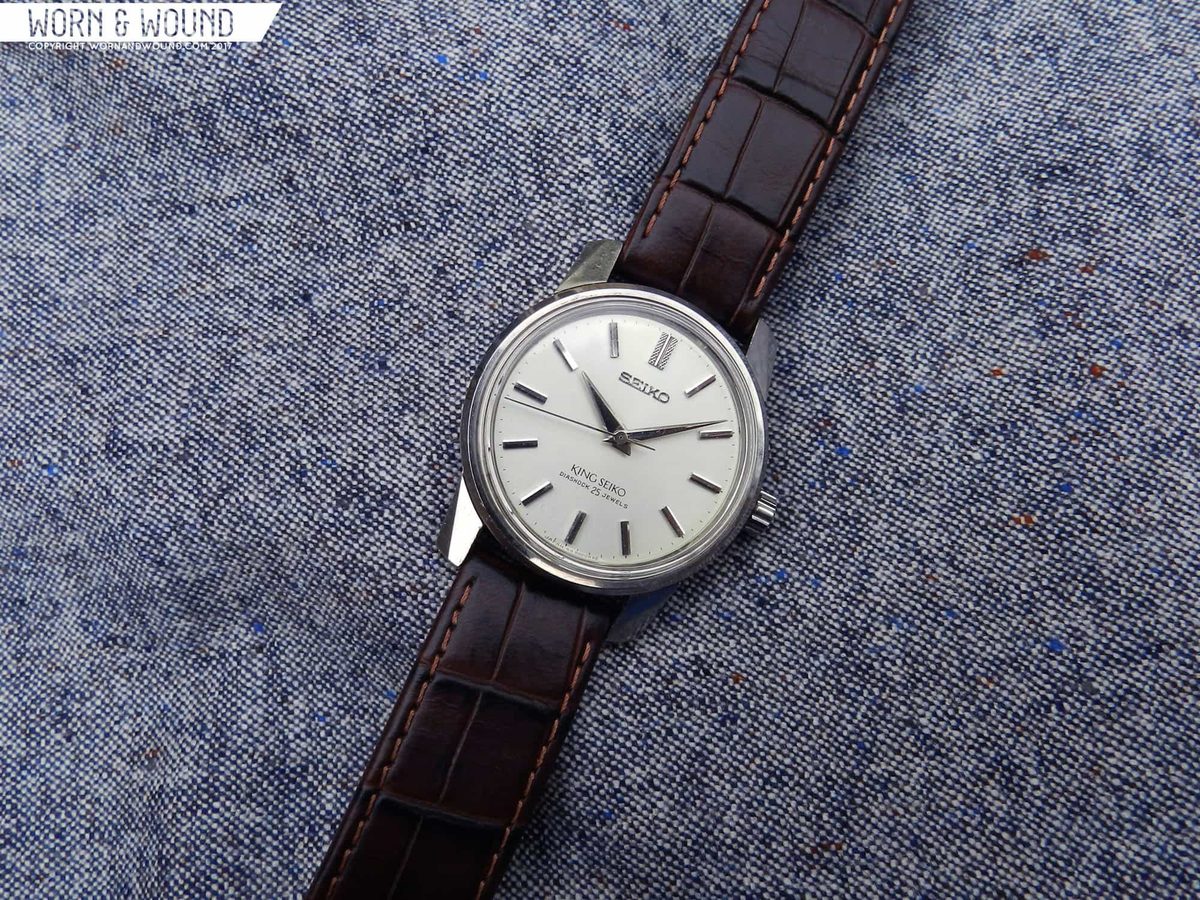
Why It Matters: The 44GS was produced concurrently with the King Seiko 44KS — its internal rival from Seiko’s other factory. This competition pushed both teams to outdo each other in finishing quality, creating some of the finest watches ever produced in Japan. Browse our 44KS collection piece to see the rivalry firsthand.
Grand Seiko vs Rolex: The Honest Comparison
The most common question from Western collectors entering the Grand Seiko world: how does it compare to Rolex? The answer depends entirely on what you value:
At comparable price points (vintage Grand Seiko $1,000–3,000 vs vintage Rolex $4,000–10,000), Grand Seiko consistently delivers superior finishing. The market is catching up — as we explore in our guide to vintage Seiko icons, prices have risen 40% in three years.
Collecting Vintage Grand Seiko: Where to Start
The best entry points into vintage Grand Seiko collecting:
- 56GS — automatic, slim case, stunning dials. $800–1,500.
- 61GS Hi-Beat — 36,000 bph, the accuracy champion. $1,200–2,500.
- King Seiko 44KS — manual wind, Grammar of Design case. $600–1,200.
- King Seiko 45KS Hi-Beat — gold case, 36,000 bph. $1,000–2,000.
The Grammar of Design in Modern Grand Seiko
Tanaka’s 1967 principles didn’t stay frozen in the past — they evolved. Modern Grand Seiko interprets the Grammar of Design with contemporary materials and manufacturing techniques while maintaining the foundational rules. The SLGH005 “White Birch,” for example, applies Grammar of Design case geometry to a 40mm sport watch with a textured dial inspired by the birch forests near Grand Seiko’s Shizukuishi studio. The flat surfaces and sharp angles remain. The zaratsu polishing is even more refined than vintage examples. But the aesthetic language connects directly to the 44GS.
The Heritage Collection preserves the closest link to vintage Grammar of Design. Models like the SBGW231 and SBGW235 use case designs that are deliberately close to the original 44GS proportions — 36-37mm diameters, slim profiles, and hand-wound movements that honour the simplicity of the original. These modern Heritage pieces serve as a bridge for collectors: if you appreciate the modern version, the vintage originals will captivate you even more.
Spring Drive models represent the Grammar of Design at its most futuristic. The unique Spring Drive movement — a hybrid of mechanical and electronic regulation that achieves ±1 second per day — sits inside cases finished with the same zaratsu techniques used on purely mechanical pieces. The seconds hand sweeps with eerie smoothness — no ticking, no stepping, just a continuous glide that’s unique to Grand Seiko in all of watchmaking.
For collectors, understanding the Grammar of Design connection between vintage and modern is essential. A modern SBGA211 “Snowflake” and a vintage 44GS share the same design DNA — separated by 55 years but connected by four unbreakable principles. Owning pieces from both eras creates a dialogue across time that no other watch brand can replicate.
Why Western Collectors Are Finally Paying Attention
For decades, Grand Seiko was Japan’s best-kept secret. The watches were sold almost exclusively through Japanese domestic retailers, with minimal international distribution and zero Western marketing. A collector in London or New York might own five Rolexes and three Omegas without ever having seen a Grand Seiko in person.
Three factors changed this. First, the internet connected Japanese sellers with global buyers — platforms like eBay Japan and Chrono24 suddenly made vintage Grand Seiko available worldwide. Second, watch media began covering Grand Seiko seriously — Hodinkee, Worn & Wound, and other influential platforms published in-depth reviews that exposed Western audiences to zaratsu finishing and Grammar of Design for the first time. Third, Seiko made the strategic decision to separate Grand Seiko into an independent brand in 2017, with its own dedicated boutiques in major Western cities.
The result has been a steady appreciation in both awareness and prices. Vintage Grand Seiko pieces that sold for $400-600 five years ago now command $1,000-2,000. The 44GS has nearly tripled in the same period. And the market is still in early innings — Grand Seiko’s global brand awareness remains a fraction of Rolex or Omega. The trajectory is clear, and the opportunity window is narrowing with each passing year.
Frequently Asked Questions
What is the Grand Seiko Grammar of Design?
A set of four design principles created by Taro Tanaka in 1967: flat surfaces with sharp angles, two-dimensional bezels, zero visual distortion, and unique case design for every model.
What is zaratsu polishing?
A hand-polishing technique adapted from the German “Sallaz” method that creates perfectly flat, distortion-free mirror surfaces. Only trained artisans at Seiko’s workshops can perform it correctly.
Is vintage Grand Seiko a good investment?
Vintage Grand Seiko prices have risen ~40% over the past 3 years and remain significantly undervalued compared to Swiss equivalents. The combination of superior finishing, limited supply, and growing global awareness suggests continued appreciation.
Grand Seiko vs Rolex — which is better?
Different philosophies. Grand Seiko offers superior finishing and dial artistry at lower prices. Rolex offers stronger resale value and brand recognition. At equivalent price points, Grand Seiko provides more horological craftsmanship.
What is the best vintage Grand Seiko to start with?
The 56GS (automatic, slim, beautiful dials, $800–1,500) or King Seiko 44KS (manual wind, Grammar of Design case, $600–1,200). Both offer exceptional quality at accessible prices.
Explore our vintage Grand Seiko & King Seiko collection
Browse all collections, read our blog, or contact us about specific pieces.