
Uncategorized
Japanese Watchmaking Philosophy: Zaratsu Polishing and Beyond
Apr
Japanese Watchmaking Philosophy: Zaratsu Polishing & Beyond
A vintage Grand Seiko doesn’t announce itself with complications or brand prestige. It earns your attention through distortion-free reflections on a case surface so flat it looks like liquid metal frozen in place. That’s Zaratsu polishing — a technique that takes years to master and seconds to appreciate. This is the story of how Japanese watchmaking built its own definition of perfection, one mirror-finished surface at a time.
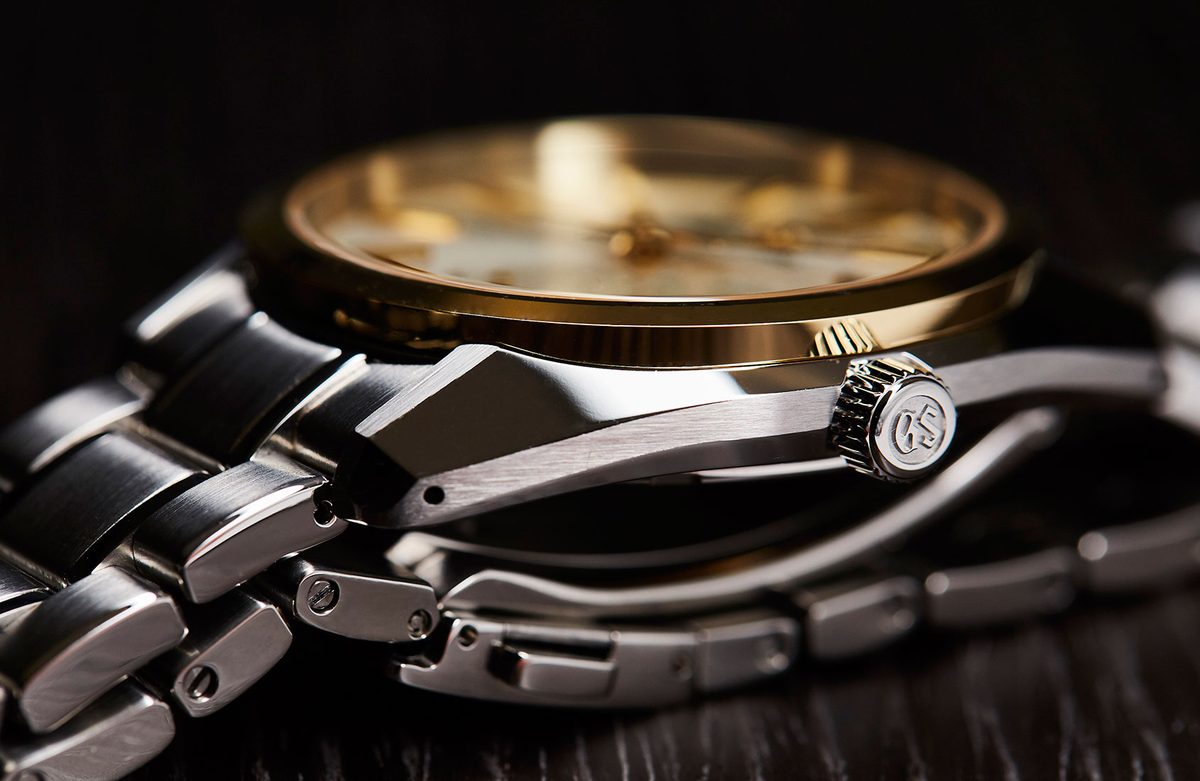
I remember the exact moment I understood what made vintage Grand Seiko different. A dealer in Tokyo’s Nakano Broadway handed me a 1968 Grand Seiko 6145-8000 and told me to look at the case side at a sharp angle. Under the shop’s fluorescent lights, the flat surface reflected everything with zero distortion — no waviness, no ripples, nothing. Just a perfectly flat mirror. I’d handled Patek Philippes and Audemars Piguets that cost ten times as much. None of them had case finishing like this.
That moment sent me down a rabbit hole that lasted years. Japanese watchmaking, I discovered, operated on a fundamentally different set of values than Swiss or American watchmaking. It wasn’t about heritage or exclusivity. It wasn’t about complication count. It was about perfection in execution — doing a limited number of things so well that the result spoke for itself. The vintage Grand Seiko philosophy crystallized this approach into something tangible, wearable, and deeply satisfying.
What Is Zaratsu Polishing?
Zaratsu polishing — sometimes spelled “Sallaz” after the German machine that inspired the technique — is a method of achieving perfectly flat, distortion-free mirror surfaces on watch cases. The name derives from the Sallaz polishing machine, originally developed in Germany for optical lens polishing. Seiko adapted this technology in the 1960s and applied it to watch case finishing with a level of obsession that went far beyond the machine’s original purpose.
The technique involves pressing the watch case component against a rotating tin plate at a precise angle. The plate is coated with polishing compound, and the artisan controls pressure, angle, and duration entirely by hand. Too much pressure creates heat distortion. Too little produces an uneven surface. The wrong angle rounds off edges that should remain sharp. A single Zaratsu-polished surface can take 15-20 minutes of continuous hand-guided work — and a typical vintage Grand Seiko case has multiple surfaces requiring this treatment.
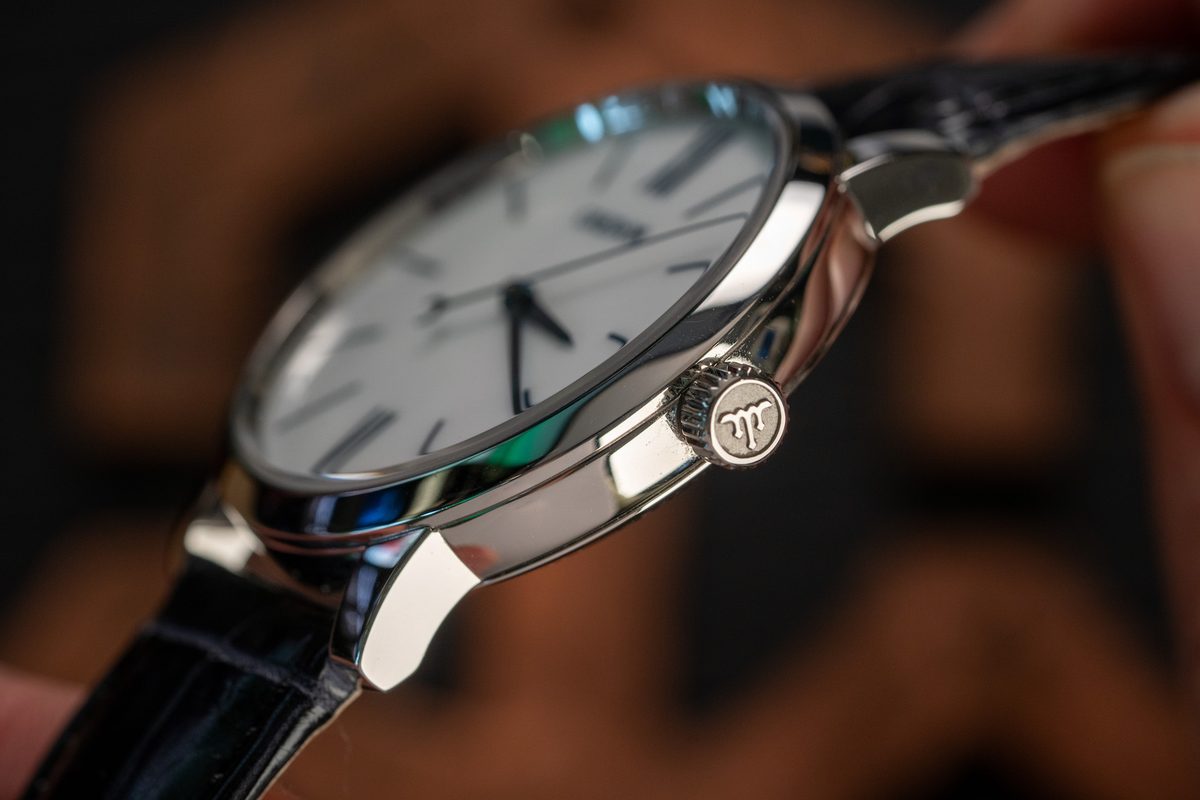
The result is a mirror finish with a critical distinction: the surface remains perfectly flat. Standard buffing and polishing rounds off edges and creates subtle waviness visible at extreme angles. Zaratsu polishing produces a surface where two adjacent flat planes meet at a knife-sharp edge — what Grand Seiko calls a “ridge line.” This sharp transition between polished and brushed surfaces creates a dramatic visual effect as light moves across the case.
Only a handful of artisans at Seiko’s facilities can perform Zaratsu polishing to the standard required for vintage Grand Seiko and modern Grand Seiko timepieces. The skill takes approximately 8-10 years of daily practice to fully develop. There’s no shortcut, no CNC substitute, no automated process that replicates it. The human hand remains the only tool precise enough to produce the result.
The Grammar of Design: Grand Seiko’s Visual Language
Zaratsu polishing doesn’t exist in isolation. It’s one element of a broader design philosophy that Grand Seiko calls “The Grammar of Design” — a set of principles established in 1967 that govern how every Grand Seiko should look and feel. These rules dictated proportions, dial layouts, hand shapes, and case finishing standards for decades.
The nine elements of the Grammar of Design include: a flat dial surface, flat or faceted indices, broad and flat hands, a flat bezel, a case with sharp lines from Zaratsu polishing, balanced overall proportions, a play of light and shadow on every surface, a case design that expresses the watch’s character, and dimensions suited for comfortable daily wear. Notice the emphasis on “flat” — this wasn’t accidental. Japanese aesthetics prize clean surfaces that interact with light, and the Grammar of Design encoded that aesthetic preference into engineering specifications.
The 44GS case design, introduced in 1967, became the definitive expression of these principles. Designed by Taro Tanaka, the 44GS featured a case with multiple polished and brushed surfaces meeting at sharp Zaratsu-polished edges. Viewed from different angles, the case appeared to change shape — the interplay of light on flat and curved surfaces created an almost architectural effect. This case design has been revived repeatedly in modern Grand Seiko collections because its visual vocabulary remains unmatched.
Insight: The Grammar of Design was deliberately created as a counterpoint to Swiss design conventions. While Swiss watches in the 1960s favored rounded, organic case shapes, Grand Seiko chose angular, architectural forms. The philosophy was: a watch case should be a study in geometry, not sculpture. Every surface should have a purpose — either reflecting light or providing contrast to an adjacent surface.
Vintage Grand Seiko: The Models That Defined an Era
The golden age of vintage Grand Seiko runs roughly from 1960 to 1975 — a fifteen-year period that produced some of the most impressive mechanical watches ever made in Japan. During this era, Seiko was engaged in an internal competition between its two main factories — Suwa (Seiko Epson) and Daini (Seiko Instruments) — that drove both divisions to extraordinary heights of accuracy and finishing quality.
The 61GS (reference 6145-8000 and variants) is arguably the most popular vintage Grand Seiko among collectors today. It features a 36mm case with full Zaratsu polishing, the hi-beat caliber 6145A running at 36,000 vibrations per hour, and a dial design that varies from clean silver sunburst to dramatic textured patterns depending on the variant. The higher frequency — double that of most Swiss movements at the time — produced smoother seconds hand motion and theoretically greater accuracy.
The VFA models represent the pinnacle of Seiko’s mechanical watchmaking ambitions. “Very Fine Adjusted” indicated a level of chronometric regulation that met or exceeded Swiss observatory standards. These watches were individually regulated over weeks, adjusted in multiple positions and temperatures, to achieve accuracy within a few seconds per day. At the time, the VFA calibers competed directly with the best movements from Zenith, Girard-Perregaux, and Omega — and often won.
What makes these vintage Grand Seiko models remarkable from today’s perspective is their size. Most measure between 35mm and 37mm in diameter — small by modern standards, but perfectly proportioned for the era. On the wrist, the Zaratsu-polished case creates a visual presence that belies the modest dimensions. Light catches the flat surfaces and sharp edges, drawing the eye in a way that larger but less precisely finished cases cannot match.
Beyond Zaratsu: Other Japanese Finishing Techniques
Zaratsu polishing gets the most attention, but Japanese watchmaking employs several other finishing techniques that deserve recognition. Together, they form a finishing vocabulary that rivals — and in some areas surpasses — Swiss haute horlogerie conventions.
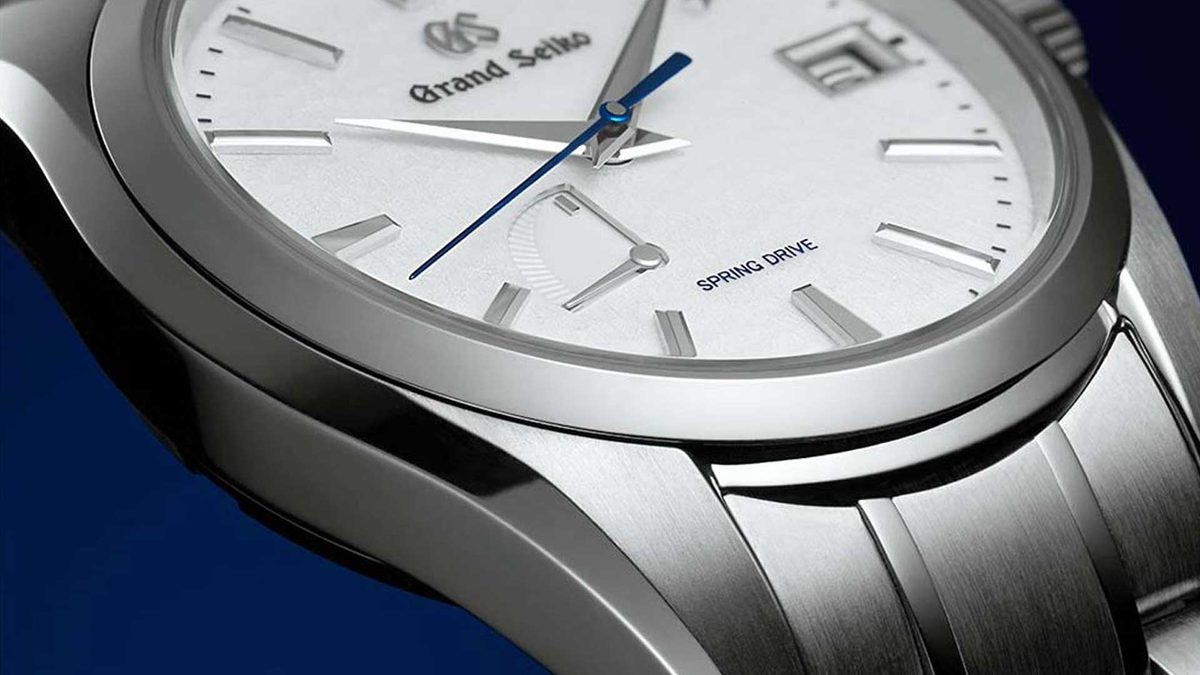
Dial making at Seiko’s facilities involves processes that Swiss brands rarely attempt. The snowflake dial on modern Grand Seiko models uses a stamping technique that presses a textured pattern into the metal dial blank, creating a surface that catches light differently across every square millimeter. The technique is so precise that each dial requires its own custom stamping die, hand-finished by an artisan who examines the result under magnification before approving it.
Hand finishing of movement parts follows Japanese tradition too. The concept of takumi — master craftsmanship — applies to every visible and invisible surface of a high-grade Seiko movement. Bridges receive a finish called “flat polishing” that’s the movement-component equivalent of Zaratsu: perfectly flat, distortion-free mirror surfaces. Screw heads are polished individually. Even surfaces hidden under other components receive finishing treatment — not because anyone will see them, but because leaving them unfinished would violate the philosophical commitment to complete execution.
Spring Drive technology, introduced in 1999 and still exclusive to Seiko/Grand Seiko, represents another dimension of Japanese watchmaking philosophy. It combines a mechanical mainspring with an electromagnetic regulator, producing a seconds hand that sweeps with perfect smoothness — no tick, no visible steps. The technology took 28 years to develop from concept to production. That timeline tells you everything about Japanese patience in pursuit of a specific goal.
Tip: When examining a vintage Grand Seiko in person, look at the case from the side at eye level. Tilt it slowly. On a properly Zaratsu-polished case, you’ll see the reflection transition from one flat surface to the next with a crisp, sharp line — no gradual curve, no blending. That ridge line is the signature of authentic Zaratsu work. If the edges look rounded or the reflections waver, the case has been repolished by someone who didn’t use the Zaratsu technique.
Japanese vs. Swiss Finishing: A Comparative View
The comparison isn’t about which tradition is “better.” They’re answering different questions. Swiss finishing asks: “How can we decorate this surface beautifully?” Japanese finishing asks: “How can we make this surface geometrically perfect?” Both approaches produce exceptional watches. But they appeal to different sensibilities, and understanding the distinction helps collectors appreciate what they’re looking at when they examine a vintage Grand Seiko alongside a vintage Patek Philippe or Jaeger-LeCoultre.
Collecting Vintage Grand Seiko: What to Look For
The vintage Grand Seiko market has matured significantly since the early 2010s, when these watches were a genuine bargain. A clean 6145-8000 that sold for $800 in 2012 might command $3,000-5,000 today. Still reasonable compared to Swiss equivalents of similar quality, but no longer the hidden secret it once was.
Condition matters more with vintage Grand Seiko than with almost any other vintage watch. The Zaratsu polishing is fragile — once the sharp edges are rounded by repolishing, they cannot be restored without Seiko’s proprietary equipment and trained artisans. A vintage Grand Seiko with original, un-repolished case surfaces is worth significantly more than one that has been polished by a third-party watchmaker. Check the ridge lines: sharp and crisp means original; soft and rounded means repolished.
Dial condition is equally critical. Vintage Grand Seiko dials are known for remarkable preservation when stored properly, but moisture damage or improper storage creates marks and discoloration that cannot be reversed. The sunburst finish should be even across the entire dial. Applied indices should sit flush and perfectly aligned. Any signs of relume (re-applied luminous material) significantly reduce value.
For in-depth guides on specific vintage Grand Seiko references, servicing recommendations, and current market analysis, visit our blog. You can also browse our curated selection of authenticated pieces at the shop, or learn more about our authentication process and team on our about page.
Collector’s Note: The most undervalued vintage Grand Seiko models right now are the manual-wind 45GS references from the Daini factory. They feature superb Zaratsu polishing, slim case profiles, and beautifully finished movements — but because they lack the “hi-beat” cachet of the 61GS, they trade at a discount. For collectors who prioritize case finishing and wearing comfort over movement specifications, the 45GS is the smartest buy in the vintage Grand Seiko market.
FAQ: Japanese Watchmaking and Zaratsu Polishing
Can Zaratsu polishing be done by independent watchmakers?
In theory, yes — the Sallaz machine design is not proprietary to Seiko. A few independent polishers in Japan and Europe have acquired or built similar equipment. But the skill required is the real barrier. Seiko’s Zaratsu artisans train for 8-10 years under direct mentorship. An independent polisher attempting Zaratsu work without that training will typically produce results that look close but fail the “ridge line” test — the edges won’t be as sharp, and the flat surfaces will show subtle waviness under critical light.
Why is vintage Grand Seiko cheaper than comparable Swiss watches?
Several factors converge. Grand Seiko was primarily a domestic Japanese brand until 2010 — Western awareness came late. Seiko’s corporate history as a “mass market” brand (despite Grand Seiko being genuinely high-end) created a perception gap. And supply remains relatively abundant compared to vintage Rolex or Omega — Seiko produced more watches overall, even if Grand Seiko models were a small fraction. The gap is narrowing as Western collectors discover the finishing quality, but prices remain favorable compared to Swiss equivalents.
What is the difference between Grand Seiko and King Seiko?
Grand Seiko was produced by Seiko’s Suwa division (now Seiko Epson) and represented the company’s highest finishing standards. King Seiko came from the Daini division (now Seiko Instruments) and occupied a slightly lower tier — still excellent, but with less intensive case finishing. In practice, the best King Seiko models rival Grand Seiko in quality. The rivalry between the two factories drove innovation at both. For collectors, King Seiko offers Grand Seiko-adjacent quality at lower prices, making it an attractive entry point into vintage Japanese watchmaking.
How do I verify if a vintage Grand Seiko has original Zaratsu polishing?
Three checks. First, examine the edges between polished and brushed surfaces — they should meet at a crisp, knife-sharp line with no gradual transition. Second, view the flat polished surface at a shallow angle under a single light source — the reflection should be perfectly uniform with zero waviness or distortion. Third, check the lugs from the side — on an original Zaratsu case, the lug surfaces will be perfectly flat planes, not subtly convex from over-polishing. Any rounding of these features indicates third-party repolishing.
Is vintage Grand Seiko a good investment?
Vintage Grand Seiko prices have risen steadily over the past decade, with desirable references like the 6145-8000 appreciating 300-400% since 2012. The trend is driven by increasing Western awareness and a finite supply of well-preserved examples. No investment is guaranteed, but the fundamental dynamics are favorable: growing demand, fixed supply, and a quality standard that collectors increasingly recognize as world-class. Buy the best condition you can afford and prioritize original case finishing — repolished examples appreciate more slowly.