
Uncategorized
The Most Collectible Vintage King Seiko Models
Apr
The Most Collectible Vintage King Seiko Models
King Seiko vintage watches have gone from overlooked domestic-market pieces to serious collector targets in under a decade. Prices for top references doubled between 2020 and 2025. If you want to understand which models matter — and why — this guide breaks down every reference worth chasing, with production numbers, movement specs, and real auction data.
A king seiko vintage watch from the 1960s sat in a Tokyo junk bin for ¥3,000 back in 2014. That same reference — a 44-9990 with the original bracelet — sold at a Phillips auction in Geneva for $4,200 in 2024. That trajectory tells you everything about where this market is heading. King Seiko pieces are no longer bargains. They are legitimate collectibles with documented provenance, mechanical pedigree, and a story that rivals anything coming out of Switzerland during the same era.
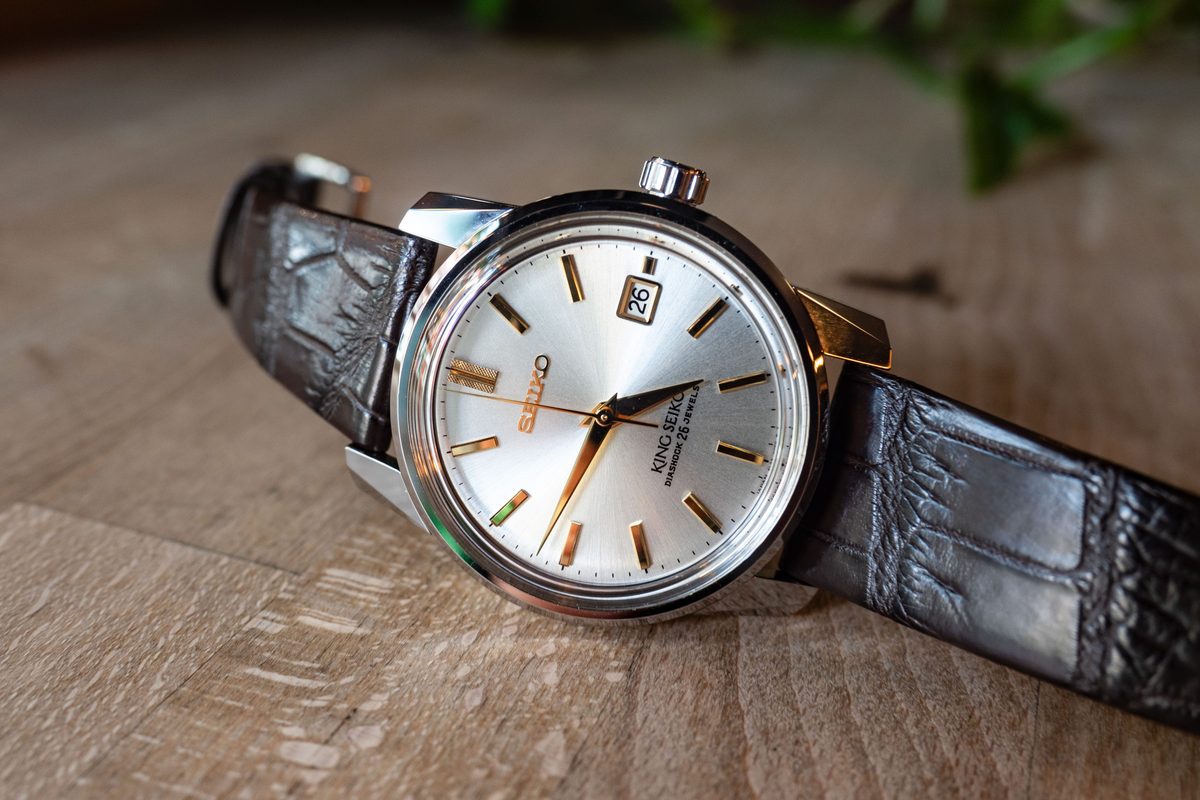
I handled my first King Seiko in 1996 at a flea market in Shinjuku. The case finishing stopped me cold — flat, polished surfaces catching light like a mirror, paired with brushed flanks that could pass for a contemporary Grand Seiko. The 5626 hi-beat movement inside was running at +3 seconds per day after thirty years without service. That experience planted a seed. Three decades later, I own fourteen vintage King Seiko references and I have watched this market mature from niche curiosity to mainstream collecting category.
Why King Seiko Vintage Pieces Command Attention Now
The story starts with the internal rivalry at Seiko during the 1960s. Two factories — Suwa (which produced Grand Seiko) and Daini Seikosha (which made King Seiko) — competed head-to-head for chronometry supremacy. Both submitted movements to the Swiss Observatory Trials at Neuchâtel. Both achieved results that embarrassed established Swiss houses. King Seiko models from Daini carried movements like the 4502A, hand-wound calibers with 36,000 vph beat rates and precision adjustments that matched COSC-grade Swiss competitors costing five times as much.
Between 1961 and 1975, Daini Seikosha produced an estimated 2.3 million King Seiko watches across roughly 80 distinct references. Most were sold exclusively in Japan. Export models existed but in tiny numbers — perhaps 5-8% of total production. That domestic focus kept King Seiko invisible to Western collectors for decades. Grand Seiko got the revival. King Seiko got forgotten. Until it didn’t.
Three factors drove the reappraisal. First, Grand Seiko prices climbed past $3,000 for common vintage references by 2018, pushing value-conscious collectors toward King Seiko as the obvious alternative. Second, Instagram accounts and YouTube channels dedicated to Japanese horology exposed Western audiences to models they had never seen. Third, Seiko themselves reissued the King Seiko line in 2021, creating mainstream awareness that boosted vintage demand overnight.
Our blog tracks King Seiko market movements and new discoveries regularly.
The Grammar of Desire — Reference Numbers Explained
Before diving into specific models, you need to decode King Seiko reference numbers. The system follows Seiko’s standard format: the first two or four digits indicate the movement caliber, and the remaining digits identify the case design. So a 44-9990 uses the caliber 44 (manual wind, 36,000 bph) in the 9990 case shape. A 5626-7000 runs the 5626 automatic movement in the 7000 body. Once you crack this code, you can read any King Seiko listing and instantly know what you are looking at — movement type, beat rate, winding method — before seeing a single photo.
Top-Tier Collectible References
The 44-9990 — King of King Seiko
Every collecting category has its grail. For king seiko vintage enthusiasts, the 44-9990 sits at the top of the pyramid. Nicknamed “KSK” after the prominent “King Seiko Chronometer” text on the dial, this reference was Daini Seikosha’s answer to the Grand Seiko 45GS. The 4420A hand-wound movement inside beats at 36,000 vibrations per hour — a technical achievement that few Swiss houses matched at the time. Each movement was individually adjusted in six positions to meet chronometer-grade standards, though Seiko used their own internal certification rather than submitting to COSC.
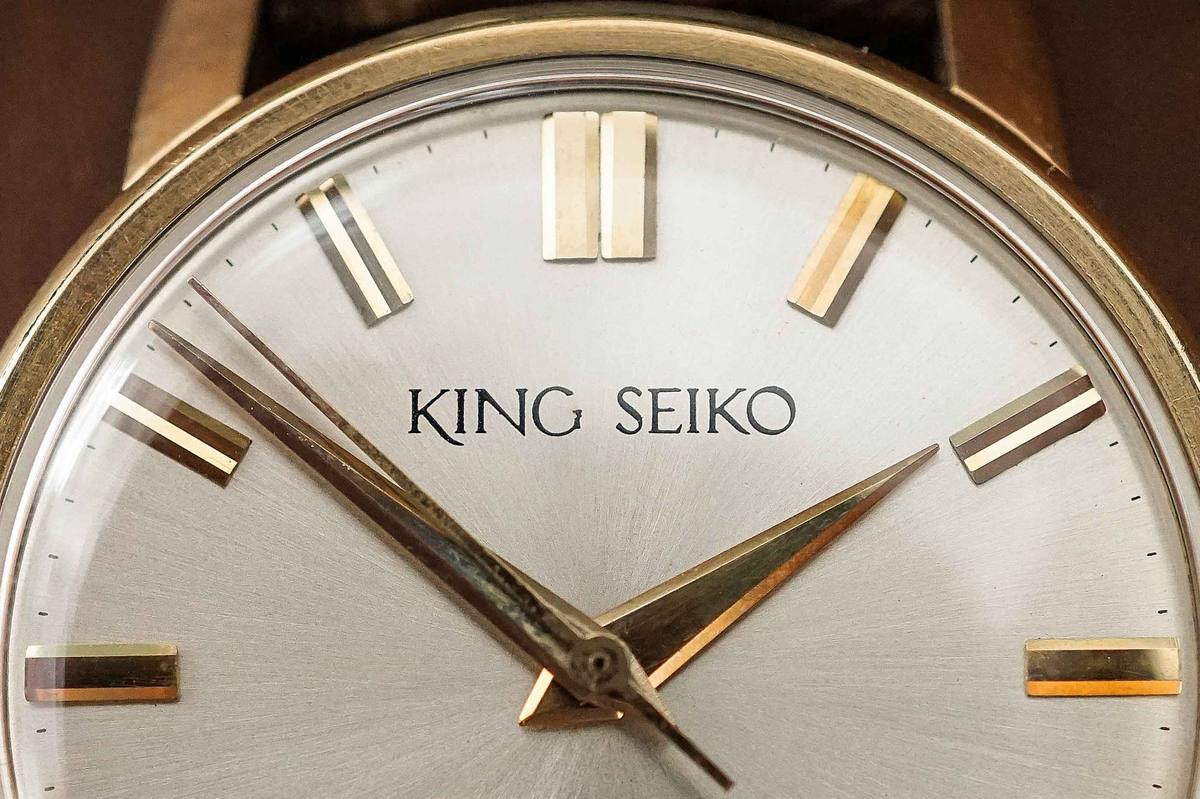
The case measures 36.5mm in diameter — small by modern standards but period-correct and surprisingly wearable. Case finishing follows what Seiko later codified as the “Grammar of Design” philosophy: sharp transitions between polished and brushed surfaces created by hand on a tin-lap polishing wheel. Hold a 44-9990 next to a contemporary Rolex Datejust from the same year and the Seiko’s case work is objectively superior. Flat planes are flatter. Edges are crisper. Reflections are more defined.
Production numbers remain debated, but serial number analysis suggests approximately 12,000–15,000 units were made between 1969 and 1972. Of those, perhaps 3,000–4,000 survive in collectible condition today. Dial variations include silver sunburst (most common), champagne gold (scarce), and dark grey (rare, commanding a 40-60% premium).
Collector’s Tip: When buying a 44-9990, check the case back medallion. Original examples have a deeply stamped “KS” shield with crisp edges. Polished-out or re-engraved medallions indicate case work — often covering deep scratches or corrosion pitting that reduces value by 30-40%.
The Grammar of Design Models — 4402-8000 and 4420-8000
Taro Tanaka’s “Grammar of Design” philosophy, introduced in 1969, established rules for King Seiko case construction that still influence Seiko’s design language today. The core principle: every surface must be intentional. Flat planes reflect light uniformly. Curved surfaces transition smoothly. No ambiguity between a flat surface and a curved one — the boundary is a knife edge.
The 4402-8000 and its hi-beat sibling the 4420-8000 are the purest expressions of this philosophy. Both feature the distinctive “sharp-edged” case with a flat bezel top, angular lugs, and a case side profile that changes character completely depending on the viewing angle. Straight on, the watch appears slim and elegant. From the side, those hard edges create dramatic shadow lines that give the 36mm case visual weight beyond its dimensions.
Prices for clean Grammar of Design references have climbed steadily. A 4402-8000 in excellent condition with the original H-link bracelet sold for $3,800 at auction in December 2024. Five years earlier, the same configuration brought $1,200. That 200%+ appreciation outpaces most Swiss vintage watches over the same period.
Mid-Range Collectibles — The 5626 and 5625 Automatics
Not every collector wants to spend $3,000+ on a vintage King Seiko. The 5626 and 5625 series automatic models offer genuine horological quality at entry-level prices, and several references within these families are beginning to attract serious attention.
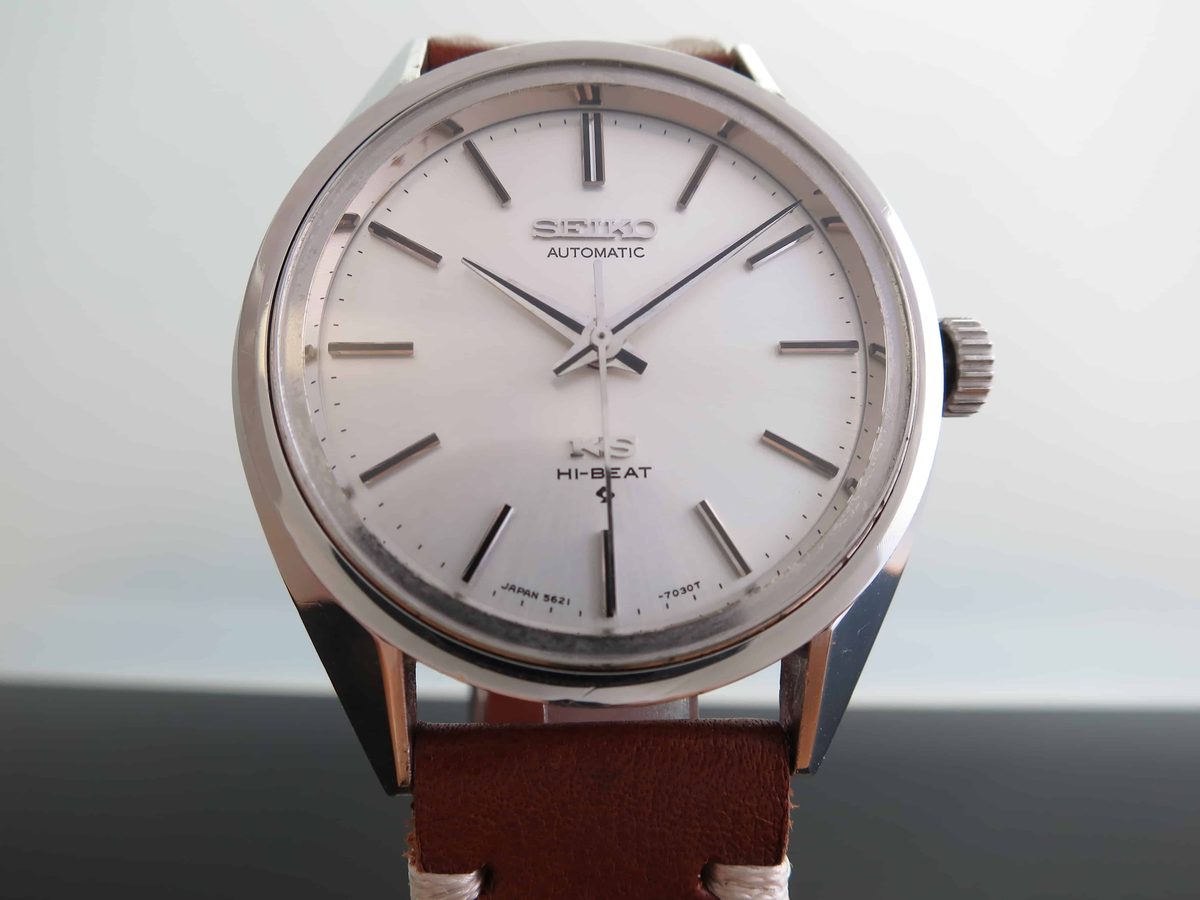
The 5626-7000, often called the “Superior” by collectors (though Seiko never used that name officially), features a day-date complication with kanji/English day wheel — a charming detail that Western collectors find irresistible. The 5626A movement runs at 28,800 vph with a 45-hour power reserve and hacks when you pull the crown. Build quality is outstanding for what was essentially a mid-range domestic watch: hardlex crystal (easily replaced with aftermarket sapphire), stainless steel case with decent finishing, and a dial quality that punches well above its original retail position.
The 5625-7000 is the date-only variant, slightly thinner and arguably more elegant. Both references can still be found for under $1,000 in good condition, making them excellent entry points for new collectors and strong candidates for appreciation as the market matures.
Condition Grading — What Separates a $500 Watch from a $5,000 One
The single biggest value killer for any king seiko vintage piece is over-polishing. Japanese domestic watches from the 1960s and 1970s were frequently polished by local jewelers during routine service — a practice that was standard at the time but devastating to collectibility today. A Grammar of Design King Seiko with rounded-off edges from polishing loses 40-60% of its potential value compared to a sharp, unpolished example. Always examine the transition between polished and brushed surfaces. On an unpolished watch, that boundary is a visible line. On a polished watch, it is a gradual blur.
Insight: The best-preserved King Seiko watches often come from estate sales where the original owner wore the watch briefly, then stored it in a drawer for decades. Look for “dead stock” sellers in Japan — shops specializing in new-old-stock pieces pulled from warehouse inventory. Prices are higher but condition is guaranteed.
Sourcing and Buying — Where to Find Them
Japan remains the primary hunting ground. Yahoo Auctions Japan (through proxy services like Buyee or Jauce) offers the widest selection and lowest average prices. You will compete against domestic Japanese buyers who understand exactly what they are looking at, so do your homework on reference numbers before bidding. Rakuten and Mercari Japan also carry vintage King Seiko listings, often from private sellers who price below market because they lack specialized knowledge.
Outside Japan, eBay is the largest marketplace but prices run 20-40% above Japanese domestic levels. Chrono24 listings skew even higher, though the buyer protection is stronger. For top-tier references (44-9990, 4402-8000), auction houses like Phillips, Christie’s, and Bonhams now include King Seiko lots in their watch sales — a sign of how far the category has traveled in the collecting hierarchy.
Visit our curated selection of authenticated vintage King Seiko watches if you want pieces that have been vetted for originality and condition.
Service and Maintenance Realities
Owning a king seiko vintage watch means accepting certain maintenance realities. Most movements from this era — the 44-series, 45-series, 52-series, and 56-series — are well-documented and serviceable. Parts availability is decent but declining. Seiko officially discontinued parts support for most vintage calibers, but the aftermarket fills many gaps. Balance staffs, mainsprings, and setting levers are still available from third-party suppliers. Dial refinishing is possible through specialists in Japan (Dial Artisan in Tokyo is the gold standard) but purist collectors prefer original dials even with patina.
Budget $150-$300 for a full service from a watchmaker experienced with Seiko movements. Avoid generalist watchmakers who primarily work on Swiss calibers — the tooling and techniques differ enough that an inexperienced hand can damage a 36,000 vph escapement. The hi-beat movements (44-series and 45-series) are particularly sensitive to improper lubrication. Too much oil on the escape wheel and the amplitude drops. Too little and the pivots score within months.
Verdict: King Seiko represents one of the last undervalued segments in serious watch collecting. The combination of genuine historical significance, mechanical excellence, and prices that still fall below comparable Swiss references makes this the right time to build a focused collection. The window is narrowing — five years from now, the bargains will be gone.
Investment Outlook — Where Prices Are Heading
Market data from auction results, private sales, and dealer inventory pricing points to continued appreciation across the King Seiko category. The top-tier references (44-9990, 4402-8000) are likely to reach $6,000–$8,000 for mint examples within two to three years, driven by institutional auction house inclusion and growing Western collector demand. Mid-range automatics (5626, 5625 series) are projected to cross the $1,500 threshold for clean examples, up from current $600–$1,200 levels.
The wildcard is Seiko’s own modern King Seiko line. If Seiko continues to invest in the King Seiko brand with new releases and marketing — as they have done successfully with Grand Seiko — the halo effect on vintage references will accelerate. Every modern King Seiko sold creates a potential future vintage collector. That pipeline of new enthusiasts is what sustains long-term demand.
Stay informed through our about page to learn more about our approach to vintage King Seiko authentication and market analysis.
Frequently Asked Questions
What is the most valuable King Seiko reference?
The 44-9990 “KSK” Chronometer consistently brings the highest prices, ranging from $2,800 for worn examples to $5,500+ for mint-condition pieces with original bracelets. Dark grey dial variants command premiums of 40-60% above standard silver sunburst dials.
How can I tell if a vintage King Seiko dial is original?
Original dials have printing that sits slightly raised from the surface — you can feel it with a fingernail. Refinished dials feel perfectly flat. Check lume plots: originals have a slightly uneven, aged appearance. Perfect, bright lume on a 50-year-old watch is a red flag. Also examine the “King Seiko” text under magnification — original printing has consistent letter spacing and clean edges.
Are King Seiko watches waterproof enough for daily wear?
No. Original gaskets in 50-year-old cases are almost certainly degraded. Even watches rated as “water resistant” when new should be treated as splash-proof at best. Have a watchmaker replace gaskets and pressure-test the case before wearing near water. Budget $30-$50 for this service.
Should I buy a King Seiko from Japan or from Western dealers?
Japanese sources (Yahoo Auctions Japan, Mercari, specialist shops in Nakano Broadway) offer the best selection and lowest prices, typically 20-40% below Western market rates. The trade-off is that you need proxy buying services, international shipping adds cost and risk, and returns are difficult. Western dealers charge more but offer easier transactions and stronger buyer protection.
What is the difference between King Seiko and Grand Seiko vintage models?
Both lines targeted the premium domestic Japanese market, but from different factories. Grand Seiko came from the Suwa factory (Nagano Prefecture) and was positioned as the ultimate expression of Seiko’s quality. King Seiko came from Daini Seikosha (Tokyo) and competed directly with Grand Seiko in chronometry trials. Mechanically, the top-tier models from both lines are comparable. The primary differences are in case finishing philosophy and dial typography. Grand Seiko commands higher prices today largely due to brand recognition from the modern Grand Seiko revival.
The vintage King Seiko market is maturing fast. Collectors who build knowledge now — learning references, studying dial variations, developing relationships with Japanese dealers — will be positioned to acquire the best pieces before prices reach equilibrium with comparable Swiss vintage watches. The quality was always there. The market is just catching up.