
Uncategorized
Japanese Watchmaking Philosophy: Zaratsu Polishing and Beyond
Apr
Japanese Watchmaking Philosophy: Zaratsu Polishing & Beyond

Grand Seiko history stretches back to 1960, when Seiko decided to create a watch that could stand alongside the finest Swiss timepieces. But the approach was distinctly Japanese — not imitation, but reinterpretation. Where Swiss manufacturers emphasized heritage and tradition, Seiko pursued precision through engineering innovation. Where the Swiss relied on hand-finishing techniques passed down through generations, Seiko developed its own methods — including Zaratsu polishing — and refined them to levels that Swiss finishing masters now study.
This article traces the philosophy behind Japanese watchmaking through its most visible expression: the surface finishing, movement engineering, and design principles that make Grand Seiko unlike anything else in horology. It’s not a brand history recitation. It’s an examination of why Japanese watchmaking thinks differently — and why that difference matters to anyone who cares about mechanical excellence.
The Origins of Grand Seiko: 1960 and the Quest for Perfection
Grand Seiko history begins with a specific ambition: create the best wristwatch in the world. Not the most expensive. Not the most decorated. The best — measured by accuracy, durability, legibility, and comfort on the wrist. That distinction between “best” and “most expensive” is the philosophical foundation of everything Grand Seiko has done since.
The first Grand Seiko, released in 1960, used the Caliber 3180 — a manually wound movement with 25 jewels that achieved accuracy standards exceeding those of the Swiss chronometer certification (COSC) at the time. The watch was a declaration: Japan could build precision timepieces that matched European quality. Not cheaply. Not as imitation. As equals.
But it was the 1964 release of the “Grand Seiko Standard” that truly set the brand apart. This internal quality standard established nine criteria that every Grand Seiko had to meet — criteria that were, in several categories, stricter than COSC requirements. Accuracy had to fall within -3/+5 seconds per day (COSC allows -4/+6). Visual inspection covered dial printing, hand alignment, and case finishing at magnification levels that revealed flaws invisible to the naked eye.
The Suwa and Daini Rivalry
Seiko’s internal structure fueled innovation through competition. The Suwa Seikosha factory (now Seiko Epson) and the Daini Seikosha factory (now Seiko Instruments) operated as rival divisions within the same corporation. Each produced their own movements and watches, competing against each other in accuracy contests and market performance.
This internal rivalry produced remarkable results. When Suwa developed the Caliber 45, Daini responded with the Caliber 56. When Daini achieved chronometer-grade accuracy, Suwa pushed for observatory-grade precision. The competition was real — engineers from each factory were genuinely motivated to outperform the other side. Grand Seiko history is, in many ways, the story of this productive rivalry between two factories separated by mountains but united by obsession.
Historical Note: In 1968, a Seiko watch from the Suwa factory won the Geneva Observatory chronometer competition, defeating every Swiss entry. Rather than celebrate publicly — which might have embarrassed Swiss partners and competitors — Seiko downplayed the achievement. The Swiss observatory competitions were quietly discontinued soon after. Some Swiss industry figures have acknowledged that Japanese accuracy was a factor in ending the contests. Grand Seiko history includes victories that were never loudly claimed.
Zaratsu Polishing: The Mirror That Changed Everything
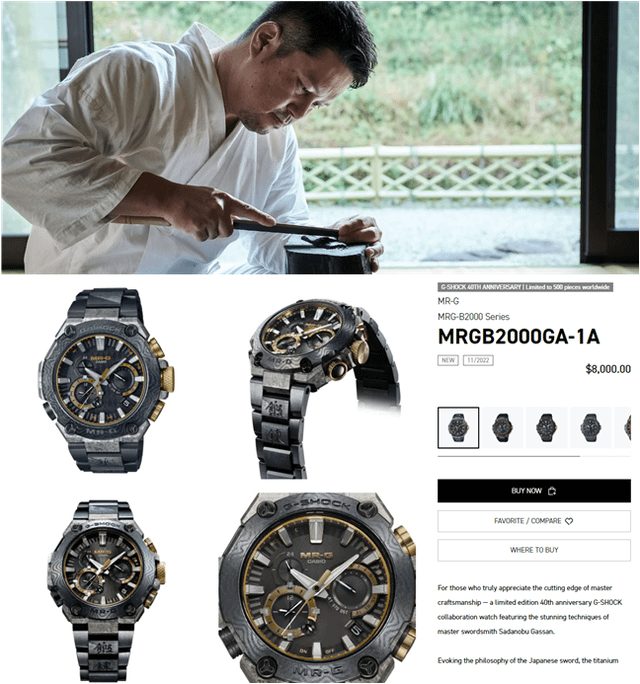
Zaratsu polishing is named after the German company Sallaz, whose flat-surface polishing machines Seiko adopted and then modified. The technique involves pressing a watch component against a rotating tin plate at a precisely controlled angle and pressure. The result is a mirror-perfect flat surface — no convexity, no waviness, no distortion.
What makes Zaratsu special isn’t the equipment. It’s the human skill required to use it. The craftsman must maintain consistent pressure across the entire surface of the component while it’s being polished. Too much pressure creates a convex curve. Too little leaves microscopic scratches. The angle must remain constant within fractions of a degree. Only a handful of Seiko’s craftsmen — estimated at fewer than ten — are certified to perform Zaratsu polishing on Grand Seiko cases.
The visual effect is unlike any other finishing technique in watchmaking. Swiss watches achieve beautiful finishes through brushing (linear grain), circular graining (Cotes de Geneve), and hand polishing (anglage on movement bridges). But none of these create the perfectly flat, distortion-free mirror surface that Zaratsu produces. When you look at a Zaratsu-polished surface, reflected objects appear with the same clarity as an actual glass mirror. It’s uncanny.
The Grammar of Design
Grand Seiko’s design language follows what the company calls the “Grammar of Design” — a set of principles established in 1967 by designer Taro Tanaka. These rules govern case shape, dial layout, hand proportions, and the interplay between polished and brushed surfaces. The key principles include flat case surfaces, sharp edges between planes, and a visual balance that draws the eye toward the dial center.
The Grammar of Design explains why every Grand Seiko looks identifiably like a Grand Seiko despite spanning dozens of references. The case shapes share DNA. The hands — wide, flat, diamond-cut — catch light in ways that enhance legibility. The indices are multi-faceted to reflect light from multiple angles. Even without seeing the logo, an experienced collector can identify a Grand Seiko from across a room by its proportions and light behavior alone.
| Finishing Technique | Method | Visual Result | Used By |
|---|---|---|---|
| Zaratsu Polishing | Flat tin plate, manual pressure control | Distortion-free mirror surface | Grand Seiko |
| Cotes de Geneve | Rotating wheel on movement bridges | Parallel curved stripes | Swiss haute horlogerie |
| Black Polish | Hand polishing steel to mirror finish | Mirror surface (can show convexity) | A. Lange & Sohne, Patek Philippe |
| Brushed/Satin | Abrasive material in linear direction | Uniform matte grain | Nearly all manufacturers |
| Anglage (Beveling) | Hand-chamfering edges at 45° | Polished bevels on movement edges | Swiss haute horlogerie, some GS movements |
| Sunburst | Radial brushing from center outward | Light-catching radial pattern | Dial finishing across price ranges |
Spring Drive: The Third Way
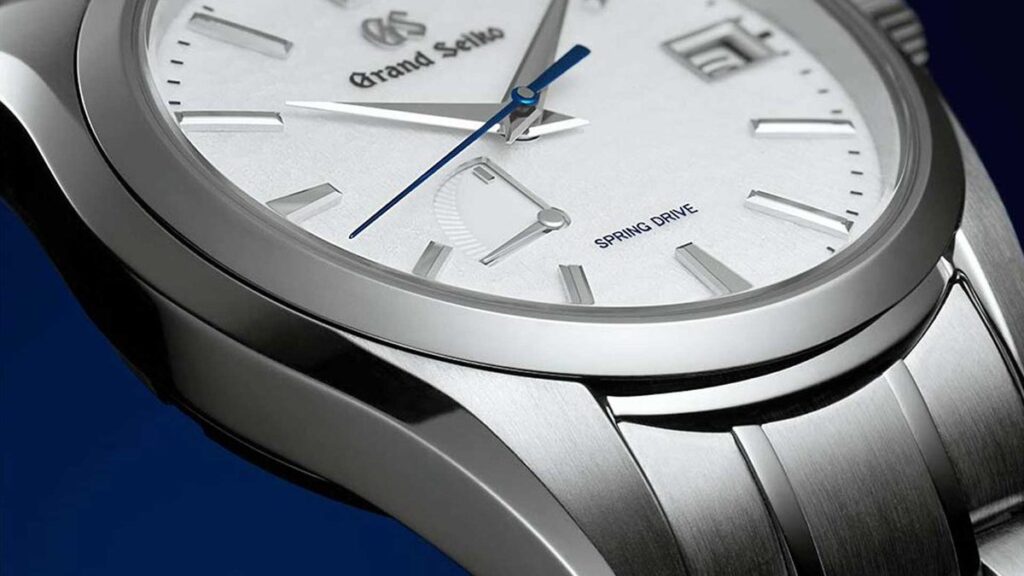
Grand Seiko history includes an invention that has no equivalent in Swiss watchmaking: the Spring Drive. Conceived by Seiko engineer Yoshikazu Akahane in 1977 and taking over twenty years to reach production, Spring Drive is neither purely mechanical nor purely quartz. It combines a traditional mainspring (energy source) and gear train (power transmission) with a quartz-regulated electromagnetic brake (timekeeping regulation).
The result is accuracy of ±1 second per day — ten times better than a certified chronometer, and approaching quartz precision — while being powered by a mainspring like a traditional mechanical watch. The seconds hand doesn’t tick. It glides. That smooth, continuous sweep is Spring Drive’s visual signature, and it’s mesmerizing. No mechanical escapement produces this motion. No quartz crystal produces it either. It’s something entirely new.
The intellectual courage behind Spring Drive deserves recognition. Akahane spent decades working on a technology that many within Seiko thought was unnecessary. Why bridge mechanical and quartz when both already existed? His answer was philosophical: because perfection in timekeeping requires drawing from every available principle, not choosing sides in an arbitrary debate. That willingness to cross boundaries — to refuse the false choice between mechanical tradition and electronic precision — defines Japanese watchmaking philosophy at its most adventurous.
Craftsmanship Detail: Each Spring Drive movement is assembled by a single watchmaker at the Shinshu Watch Studio in Shiojiri, Nagano Prefecture. The studio sits at an altitude of 800 meters, surrounded by the Japanese Alps. Temperature stability at this altitude benefits movement assembly and regulation. But the location was also chosen for its connection to nature — a reflection of Grand Seiko’s philosophy that its watches should embody the beauty of Japanese seasons and natural phenomena.
The Hi-Beat Movement: Engineering at 36,000 Vibrations
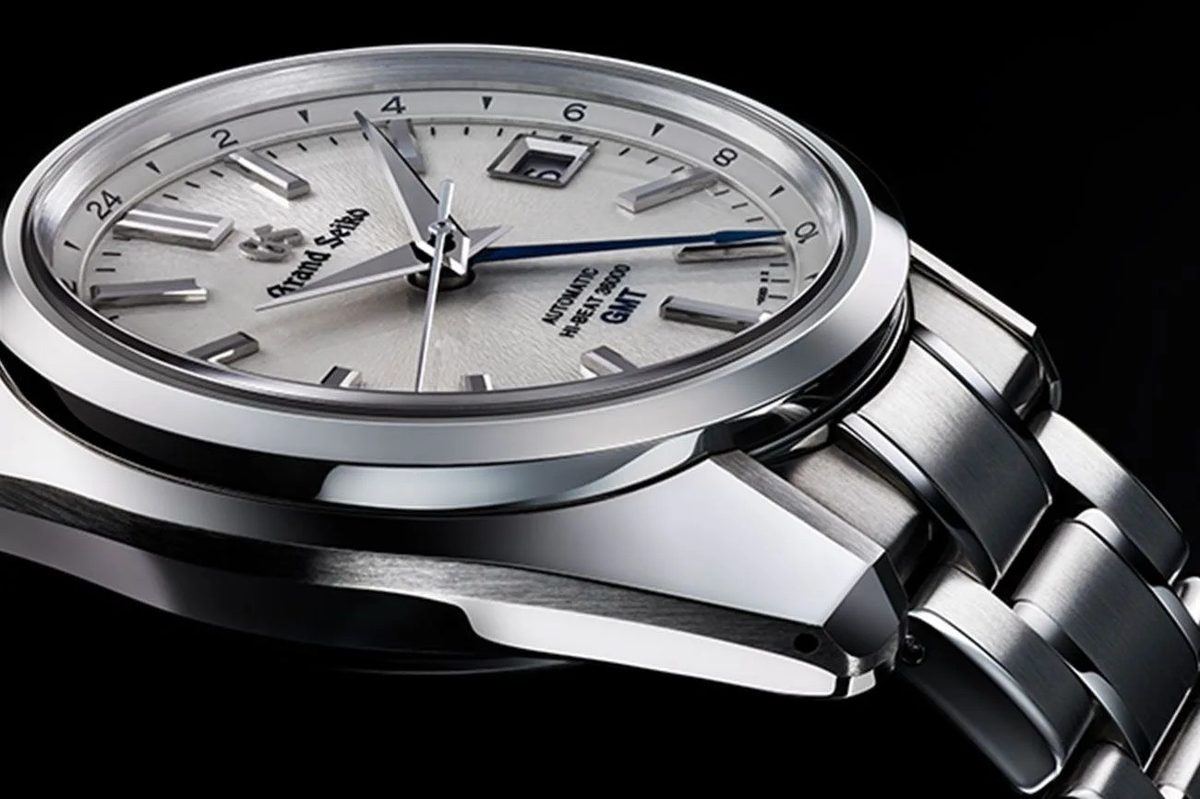
In 1968, Grand Seiko introduced the 61GS with a movement beating at 36,000 vibrations per hour (5 Hz) — significantly faster than the 28,800 vph (4 Hz) standard used by most Swiss manufacturers. Higher frequency generally means better accuracy and improved resistance to positional errors. The trade-off is faster wear on escapement components, which Seiko addressed through proprietary materials and lubricants.
The modern Caliber 9S85 Hi-Beat continues this tradition. It uses MEMS (Micro-Electro-Mechanical Systems) technology to produce escapement components with precision measured in microns — a manufacturing approach that traditional Swiss watchmaking, with its emphasis on hand-made components, has been slower to adopt. The result is an escapement that maintains consistent amplitude and accuracy over longer service intervals than earlier Hi-Beat movements.
Grand Seiko history shows a pattern: identify a physical principle that improves timekeeping, then engineer solutions for the trade-offs that principle creates. Higher frequency? Solve the wear problem. Spring-powered quartz regulation? Solve the power efficiency problem. Zaratsu flat surfaces? Solve the consistency problem through decades of craft training. The philosophy is always the same — don’t accept trade-offs, engineer through them.
Dial Artistry: Nature as Design Language
Grand Seiko dials are where Japanese aesthetics meet horological function. The “Snowflake” dial (SBGA211) reproduces the texture of fresh powder snow from the Shinshu highlands. The “Midnight Forest” dial mimics the appearance of a birch forest at night. The “White Birch” dial (SLGH005) captures sunlight through birch tree bark. Each dial is a miniature scene from nature — and each requires manufacturing techniques that push the boundaries of what’s possible on a 30mm circle.
These textured dials aren’t applied patterns. They’re created through processes that manipulate the dial material itself — stamping, pressing, chemical treatment, and multiple layers of lacquer or paint applied with controlled precision. The “Snowflake” texture, for example, uses a stamping process that creates irregular surface patterns mimicking natural snow crystal formations. No two positions on the dial are identical, just as no two snowflakes are identical.
This approach to dial design reflects a specifically Japanese aesthetic concept: the beauty of impermanence and natural variation. Swiss dial making tends toward geometric precision — sunburst patterns, linear graining, mathematically defined guilloche. Grand Seiko dials reference organic phenomena — snow, forests, seasons, water. The functional result is the same (a legible, attractive dial), but the philosophical approach differs at a foundational level.
Grand Seiko vs. Swiss: A Different Kind of Excellence
Comparing Grand Seiko to Swiss haute horlogerie isn’t about declaring a winner. It’s about understanding two distinct philosophies of watchmaking excellence. The Swiss tradition emphasizes heritage, hand craftsmanship, exclusivity, and decorative finishing. Grand Seiko history reflects a Japanese emphasis on precision engineering, material innovation, purpose-driven design, and nature-inspired aesthetics.
In finishing quality, Grand Seiko matches or exceeds Swiss watches costing three to five times more. A Grand Seiko SBGH series (approximately $5,000-7,000) exhibits case finishing that rivals a Patek Philippe Calatrava ($20,000+) or A. Lange & Sohne Saxonia ($15,000+). The Zaratsu polishing, the edge sharpness, the transition between polished and brushed surfaces — these details stand up to direct comparison with the finest Geneva and Saxon finishing.
| Category | Grand Seiko Approach | Swiss Haute Horlogerie Approach |
|---|---|---|
| Accuracy Priority | Extremely high — stricter than COSC | Important but secondary to complications |
| Movement Finishing | Functional beauty, some hand-finishing | Extensive hand decoration (Geneve Seal, etc.) |
| Case Finishing | Zaratsu + sharp edges = industry-leading | High quality, but rarely Zaratsu-level flatness |
| Innovation Model | Engineering-driven (Spring Drive, MEMS) | Tradition-driven (hand-made, heritage techniques) |
| Design Language | Nature-inspired, Grammar of Design | Heritage-referencing, classical proportions |
| Price Position | $3,000 – $50,000 (most under $10,000) | $5,000 – $500,000+ |
| Brand Perception | Growing — enthusiast-recognized | Established — mainstream luxury status |
Collector’s Insight: I’ve watched Grand Seiko’s reputation shift dramatically over the past decade. In 2015, most non-enthusiast watch buyers didn’t know the brand existed. By 2025, Grand Seiko appears in nearly every “best watches under $10,000” list published by major outlets. The separation from the Seiko parent brand in 2017 — giving Grand Seiko its own identity and dial branding — accelerated this recognition. Grand Seiko history is still being written, and the current chapter is about claiming the position its engineering has always deserved.
The Micro Artist Studio: Handcraft at the Highest Level
For those who think Grand Seiko is “only” about engineering, the Micro Artist Studio in Shiojiri provides a sharp correction. This small atelier — staffed by fewer than thirty craftspeople — produces Grand Seiko’s most exclusive pieces, including minute repeaters, enamel dials, and hand-engraved movements.
The enamel dials produced here use traditional Japanese techniques alongside European methods. Grand feu enamel — fired at temperatures above 800°C — creates dials of extraordinary depth and purity of color. Each firing risks cracking or discoloration, and typically only about half of fired dials pass quality inspection. The waste rate is accepted as necessary because the surviving pieces meet a standard that no shortcut can achieve.
Hand engraving at the Micro Artist Studio follows a specifically Japanese tradition of metal carving that traces back to sword-fitting decoration during the Edo period. The patterns — waves, pine needles, cherry blossoms — are cut directly into movement bridges using hand-held gravers without magnification aids. The result is organic, flowing decoration that differs from the geometric patterns typical of Swiss hand engraving. It’s a living connection to centuries of Japanese metalworking artistry applied to modern mechanical watchmaking.
Why Japanese Watchmaking Philosophy Matters Today
Grand Seiko history teaches a lesson that extends beyond watches: there is more than one way to achieve excellence. The Swiss defined what a great watch should be for centuries. Grand Seiko proved that a different set of values — engineering precision, material innovation, nature-inspired design, relentless internal competition — can produce results that stand alongside the best Swiss work without imitating it.
For collectors and enthusiasts, Japanese watchmaking offers something the Swiss industry increasingly struggles to provide: genuine value at accessible price points. A Grand Seiko Heritage automatic with Zaratsu finishing, in-house movement, and accuracy exceeding COSC costs less than many entry-level Swiss watches that can’t match its technical specifications. That value proposition isn’t accidental — it’s a reflection of Seiko’s engineering-first, marketing-second culture.
Zaratsu polishing, Spring Drive, Hi-Beat movements, nature-inspired dials — these aren’t gimmicks. They’re the tangible expressions of a philosophy that believes a watch should be as close to perfect as human skill and engineering knowledge allow. Grand Seiko history is the record of that belief put into practice across six decades. And for anyone willing to look past the Swiss-dominated luxury narrative, it’s one of the most compelling stories in modern watchmaking.
Read more about Japanese horology and Grand Seiko on our blog, learn about our passion for these timepieces, or explore the shop to find your own piece of this extraordinary tradition.