
Uncategorized
The Most Collectible Vintage King Seiko Models
Apr
The Most Collectible Vintage King Seiko Models
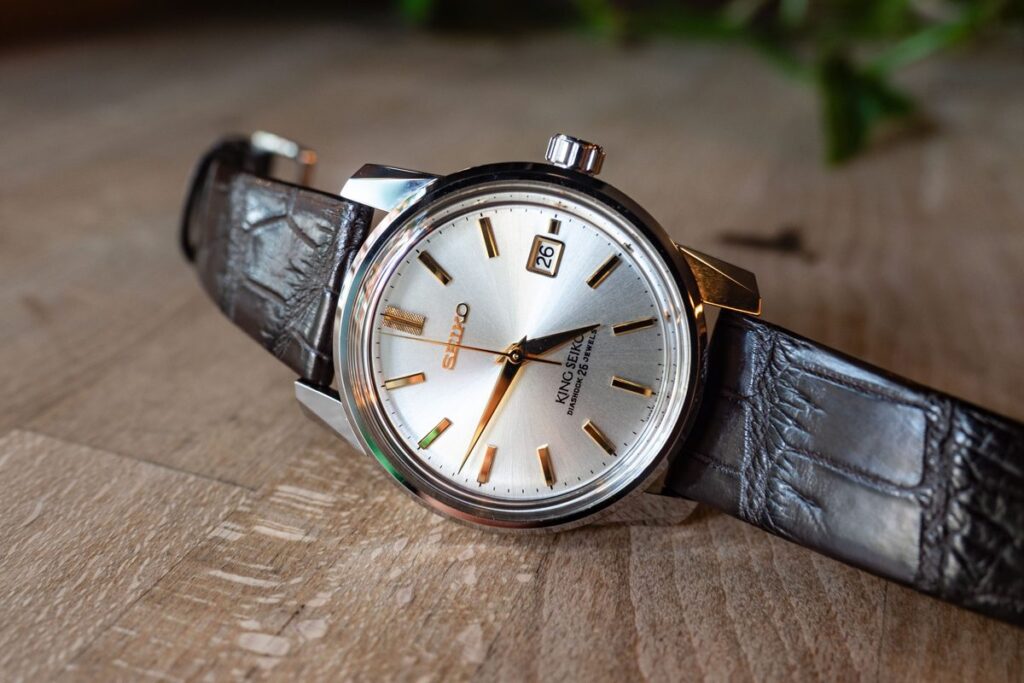
King Seiko launched in 1961 as the Tokyo counterpart to Grand Seiko’s Suwa factory. The rivalry between these two internal divisions pushed both lines to remarkable heights of precision and finishing. But while Grand Seiko eventually won the branding war, King Seiko pieces from the 1960s and early 1970s represent some of the finest mechanical watchmaking Japan ever produced — at prices that still feel like a secret.

Why King Seiko Became a Collector Target
Three forces converged. First, Seiko’s 2020 revival of the King Seiko brand under its own sub-label brought fresh attention to the originals. Second, Grand Seiko prices climbed past the $3,000–$5,000 mark on the secondary market, sending value-conscious buyers hunting for alternatives. Third — and this matters most — the original King Seiko movements genuinely rival anything produced in Switzerland during the same era.
The 45-series calibers, specifically the 4500 and 4502, achieved chronometer-grade accuracy. The 5245 and 5246 offered automatic winding with quick-set date. These weren’t mass-market throwaways. Seiko assigned its best watchmakers to these calibers and the hand-finished dials and cases reflected that commitment.
When collectors started seriously comparing a grand seiko vs rolex purchase, many discovered that the King Seiko line delivered 80% of the finishing quality at 15% of the cost. That math doesn’t last forever. Prices have already doubled on the most sought-after references between 2021 and 2025.
The Top Collectible References
KSK Ref. 44-9990 — The Grammar of Design
This is the one that started the collecting frenzy. Designed by Taro Tanaka using his “Grammar of Design” philosophy — the same principles behind the iconic Grand Seiko 44GS — the 44-9990 features a case shape that catches light from every angle. Sharp, flat surfaces transition into polished bevels with surgical precision. Zaratsu polishing on a watch that originally retailed for the equivalent of $50. Finding one in good condition today means spending $800–$1,500, depending on dial condition and whether the original bracelet survives.
KSK Ref. 45-7001 — The Chronometer
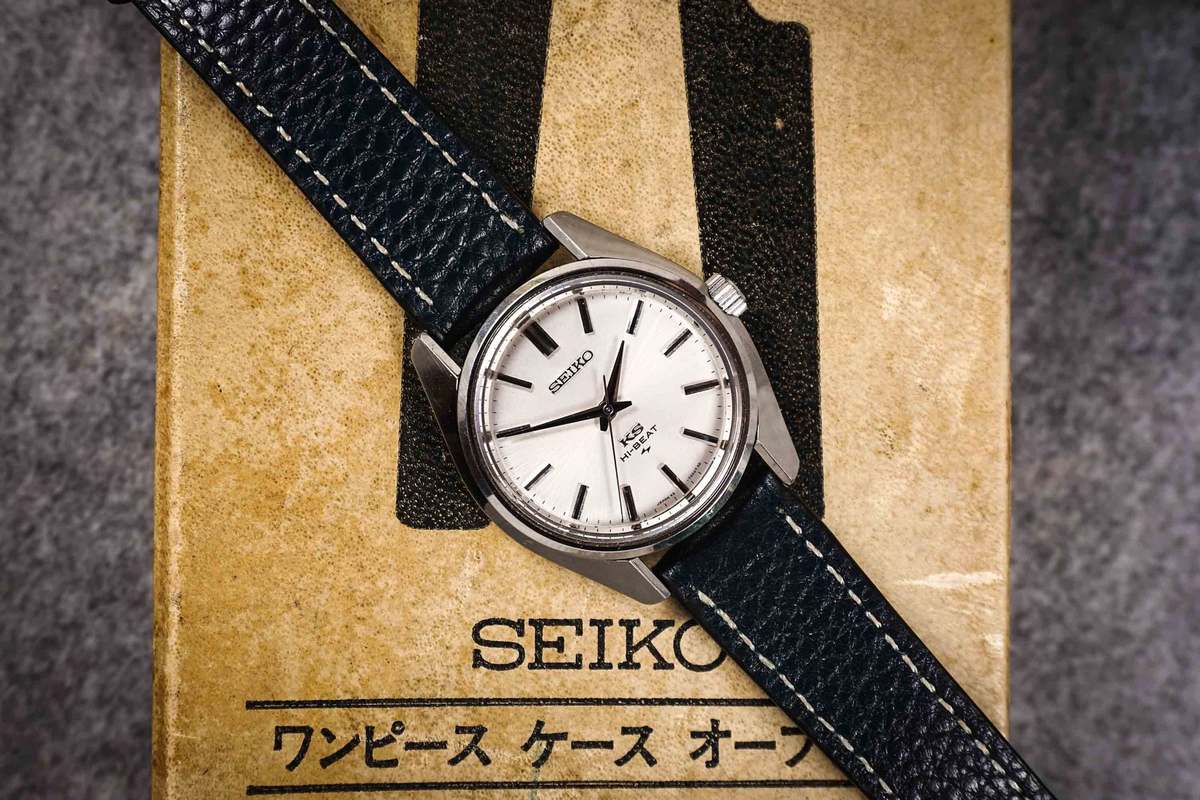
Powered by the cal. 4502, this reference earned official chronometer certification — a detail Seiko proudly stamped on the dial. The 4502 movement beats at 36,000 bph (5 Hz), matching the hi-beat technology that Seiko championed against Swiss competition. The case diameter sits at 36.5mm, which wears larger than you’d expect thanks to the short lugs and thin bezel. Prices range from $600 to $1,200.
KSK Ref. 56-7000 — The Vanquished King
Released in 1971, the 56-series represented King Seiko’s final generation before the quartz crisis ended everything. The cal. 5625A brought automatic winding with a hack function and quick-set date. These cases used a monocoque construction — no case back, movement accessed through the crystal side. It’s an unusual piece that feels distinctly different from anything Swiss. Prices sit between $300 and $700, making it the most accessible entry point.
Insight: The 56-series King Seikos are the last watches where collectors can find genuinely mint examples at reasonable prices. Factory new-old-stock pieces still surface from Japanese dealers every few months. Once that supply dries up — and it will — expect these to double overnight.
Collectible King Seiko Models — Comparison Table
| Reference | Movement | Frequency | Case Size | Key Feature | Collectibility |
|---|---|---|---|---|---|
| 44-9990 | Cal. 4402A | 18,000 bph | 36mm | Grammar of Design case | ★★★★★ |
| 45-7001 | Cal. 4502A | 36,000 bph | 36.5mm | Chronometer certified | ★★★★★ |
| 45-7000 | Cal. 4500A | 36,000 bph | 36mm | Hi-beat non-chrono | ★★★★ |
| 56-7000 | Cal. 5625A | 28,800 bph | 37mm | Monocoque case | ★★★ |
| 44-2000 | Cal. 44A | 18,000 bph | 35mm | First-gen KS design | ★★★★ |
| 52-7000 | Cal. 5246A | 21,600 bph | 37mm | Day-date automatic | ★★★ |
Grand Seiko vs Rolex — Where King Seiko Fits
The grand seiko vs rolex debate usually centers on new watches — the Snowflake against the Datejust, the Hi-Beat GMT against the Explorer. But vintage changes the equation entirely. A 1968 King Seiko 45-7001 delivers hi-beat precision, hand-finished movement decoration visible through a display caseback (on some variants), and Zaratsu-polished case surfaces. A 1968 Rolex Oyster Perpetual delivers a robust 1570-series caliber and the Rolex name. Both are magnificent. One costs $900. The other costs $6,000+.
For collectors who care about mechanical quality over brand prestige, vintage King Seiko represents the strongest value proposition in the entire watch market. The movements are serviced easily — any competent watchmaker can handle the 45-series. Parts availability remains solid because Seiko produced millions of these calibers. And the finishing, when you put a KS dial under a loupe next to a vintage Datejust dial, genuinely stands toe-to-toe.
Tip: When searching for vintage King Seiko pieces, Japanese auction sites like Yahoo Japan Auctions (via proxy bidding services) consistently offer the best selection and lowest prices. Domestic Japanese sellers often grade condition more honestly than international dealers, and shipping from Japan to the US or Europe typically costs $20–$35 with tracking.
What Drives Value — Condition, Rarity, and Originality
Three factors determine whether a vintage King Seiko is worth $200 or $2,000. Dial condition ranks first. Original, unpolished dials with intact printing and no moisture damage command massive premiums. A 44-9990 with a flawless silver sunburst dial sells for triple the price of one with a patinated or refinished dial.
Case condition comes second. Zaratsu polishing creates those razor-sharp edges and mirror-flat surfaces that define King Seiko’s visual identity. Over-polished cases — where someone tried to remove scratches and rounded off the edges — lose their character. Collectors specifically check the transitions between brushed and polished surfaces. If those lines look soft instead of crisp, the case has been butchered.
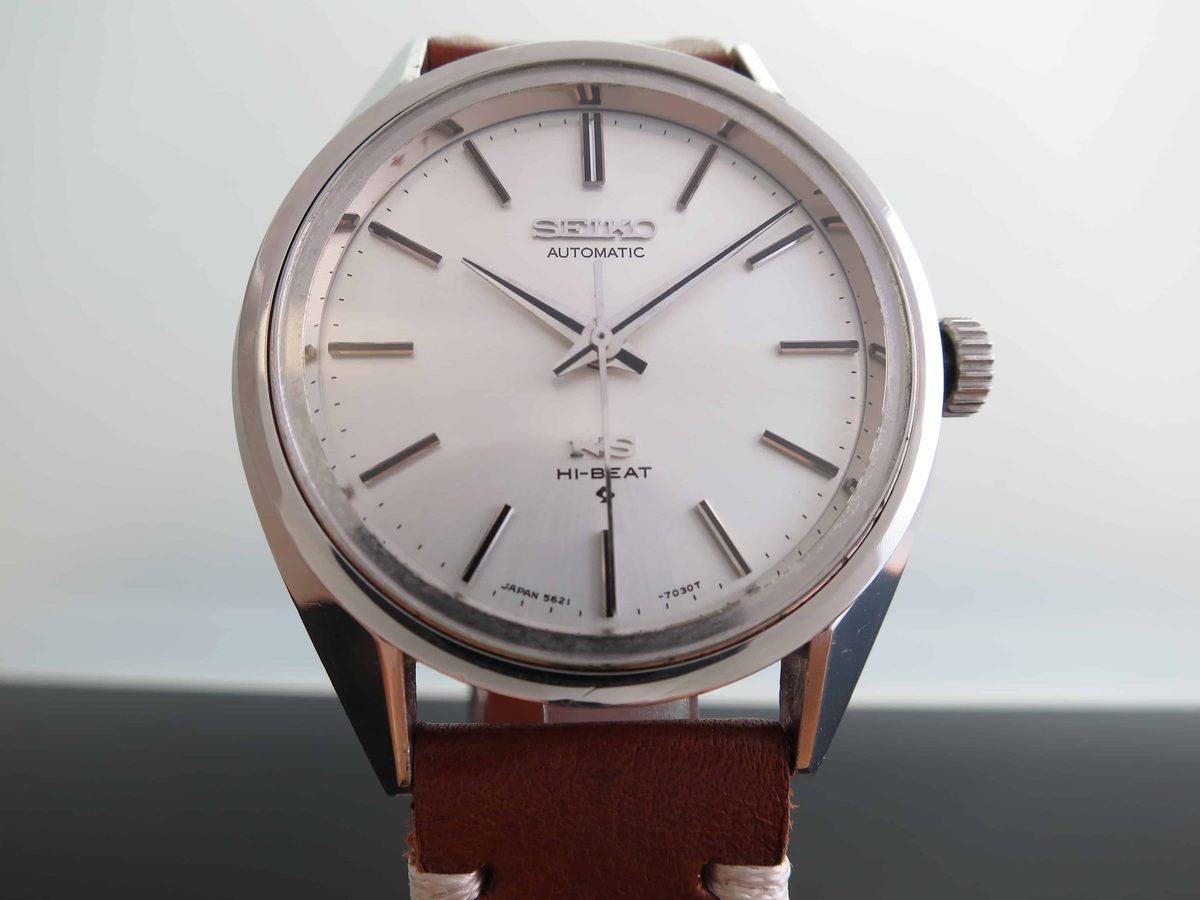
Third: originality. Replacement crowns, aftermarket crystals, and non-original bracelets all reduce value. The crown is especially important — King Seiko used distinctive medallion crowns with the KS logo that are impossible to replicate perfectly. If the crown looks generic, the watch has been repaired with non-original parts.
Price Movement and Investment Potential
| Reference | 2020 Avg Price | 2023 Avg Price | 2025 Avg Price | Trend |
|---|---|---|---|---|
| 44-9990 (mint) | $400–$600 | $800–$1,100 | $1,200–$1,800 | Strong upward ↑ |
| 45-7001 (chrono) | $350–$500 | $600–$900 | $900–$1,400 | Steady climb ↑ |
| 45-7000 | $200–$350 | $400–$600 | $550–$900 | Moderate ↑ |
| 56-7000 | $100–$200 | $200–$350 | $300–$700 | Accelerating ↑ |
| 44-2000 | $300–$500 | $500–$800 | $700–$1,100 | Steady ↑ |
Verdict: Every reference in the King Seiko lineup has appreciated meaningfully since 2020. The 44-9990 leads the pack — its connection to the Grammar of Design philosophy gives it a narrative that resonates with collectors and media alike. But the 56-series models represent the best risk-adjusted bet. They’re cheap enough that overpaying is hard, and the monocoque construction makes them conversation pieces.
Servicing and Maintenance Realities
One genuine advantage King Seiko holds over equivalent Swiss vintage: service costs. A full service on a 45-series caliber runs $150–$250 at most independent watchmakers. The equivalent service on a vintage Rolex 1500-series caliber starts at $400 and frequently hits $800+ when parts are needed. King Seiko parts remain available through Seiko’s parts network and from donor movements, which are plentiful.
The 45-series movements are especially robust. The hi-beat 36,000 bph rate might suggest faster wear on the escapement, but Seiko engineered these with hardened components that hold up remarkably well across decades. Many collectors report 45-series watches running within +5 seconds per day after a simple clean-and-oil service — no parts replacement needed.
Crystal replacement is straightforward. Most King Seiko models used mineral glass crystals that Seiko still produces. Aftermarket sapphire upgrades exist but are frowned upon by purists — and they reduce value at resale.
Where to Buy and What to Avoid
The best sourcing channels, ranked by reliability. Yahoo Japan Auctions via proxy services (Buyee, Jauce, FromJapan) — widest selection, lowest average prices, most honest condition grading. Japanese domestic dealers on eBay — slightly higher prices but no proxy hassle. Chrono24 — highest prices but buyer protection gives peace of mind. Instagram dealers — hit or miss, verify reputation before sending money.
Red flags worth memorizing. Refinished dials masquerading as original — look for text sharpness and consistency in font weight. “Franken” watches assembled from multiple donor watches — check that serial numbers on case back match the movement date. Over-polished cases with rounded edges — compare side profiles against known reference photos. Replaced crowns without disclosure — the KS medallion should show clear, crisp detail.
Honest sellers photograph the movement. If a listing shows only the dial and case with no movement shot, either the movement is in poor condition or the seller doesn’t know what they have. Neither scenario benefits you.
Building a King Seiko Collection
Start with a 56-7000. It’s affordable, automatic (convenient for daily wear), and immediately teaches you what King Seiko quality feels like on the wrist. Wear it for three months. If the finishing, the proportions, and the movement quality grab you, move to a 45-7001 chronometer — the crown jewel of the line. If you want the ultimate display piece, hunt for a 44-9990 in excellent original condition. Three watches, three price tiers, each representing a different era and design philosophy.
The grand seiko vs rolex conversation will keep raging for years. But collectors who discovered King Seiko early are already sitting on watches that outperformed both brands in percentage returns — and still cost less than a new Seiko Presage. That window is narrowing. Each year, more collectors and publications spotlight these pieces, and each spotlight nudges prices higher. The time to build a King Seiko collection was five years ago. The second-best time is right now.
Frequently Asked Questions
No. Both were produced by Seiko Corporation, but by competing factory divisions. Grand Seiko came from the Suwa factory (Nagano Prefecture), while King Seiko was produced at the Daini Seikosha factory in Tokyo. They used different calibers, different case designs, and competed directly against each other for Seiko’s internal accuracy prizes. Today, Grand Seiko operates as an independent luxury brand, and King Seiko was revived in 2022 as a separate mid-range line under the Seiko umbrella.
The hi-beat 45-series calibers (36,000 bph) matched or exceeded most Rolex calibers of the same era in raw timekeeping accuracy. The King Seiko 45-7001 carried official chronometer certification with tolerances tighter than many Swiss chronometer-rated movements. After proper servicing, these watches routinely achieve ±5 seconds per day — comparable to a serviced Rolex 1570 from the same vintage.
Vintage King Seiko watches should NOT be considered waterproof, regardless of any markings on the case back. Gaskets deteriorate over 50+ years. Even models originally rated for water resistance have lost that protection. Keep vintage King Seiko watches away from water, and if you need a service, ask the watchmaker to replace the gaskets — though this restores splash resistance at best, not dive-worthy sealing.
Most vintage King Seiko models measure 35–37mm in diameter with lug-to-lug distances under 43mm. They suit wrists from 6 inches to 7.5 inches comfortably. The short lugs and slim case profiles mean they wear larger than the diameter suggests — a 36mm King Seiko feels similar to a 38–39mm modern watch on the wrist. Collectors with larger wrists (7.5″+) may find them too small, though current fashion trends increasingly favor this classic sizing.
Market indicators point strongly toward continued appreciation. Supply of pristine examples shrinks each year as collectors absorb the best pieces into permanent collections. Seiko’s revival of the King Seiko brand generates ongoing media attention that drives new buyers into the vintage market. The grand seiko vs rolex debate regularly introduces audiences to King Seiko’s heritage. No investment is guaranteed, but vintage King Seiko occupies a rare position — low current prices, high historical significance, and growing demand.
Explore more watch guides and vintage horological content on our blog. Learn about our mission on the about page, or browse our curated selection in the shop.