
Uncategorized
Japanese Watchmaking Zaratsu Polishing
May
Japanese Watchmaking and the Art of Zaratsu Polishing
The mirror-flat surfaces on a Grand Seiko case did not happen by accident. Zaratsu polishing — a technique that demands years of training and produces finishes no CNC machine can replicate — sits at the heart of what makes Japanese luxury watchmaking different. This king seiko collector guide traces the technique from its origins through its role in defining an entire watchmaking philosophy.
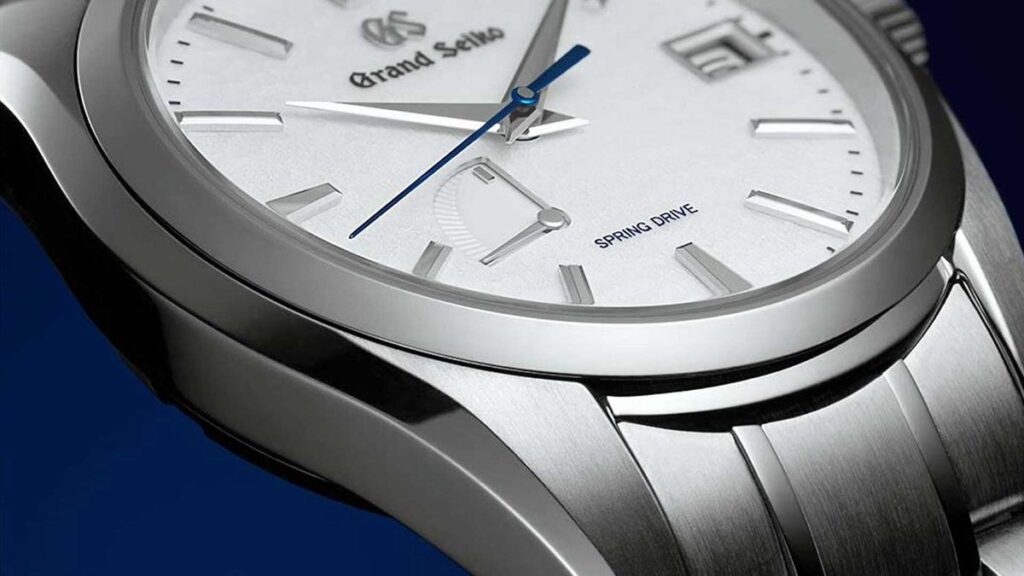
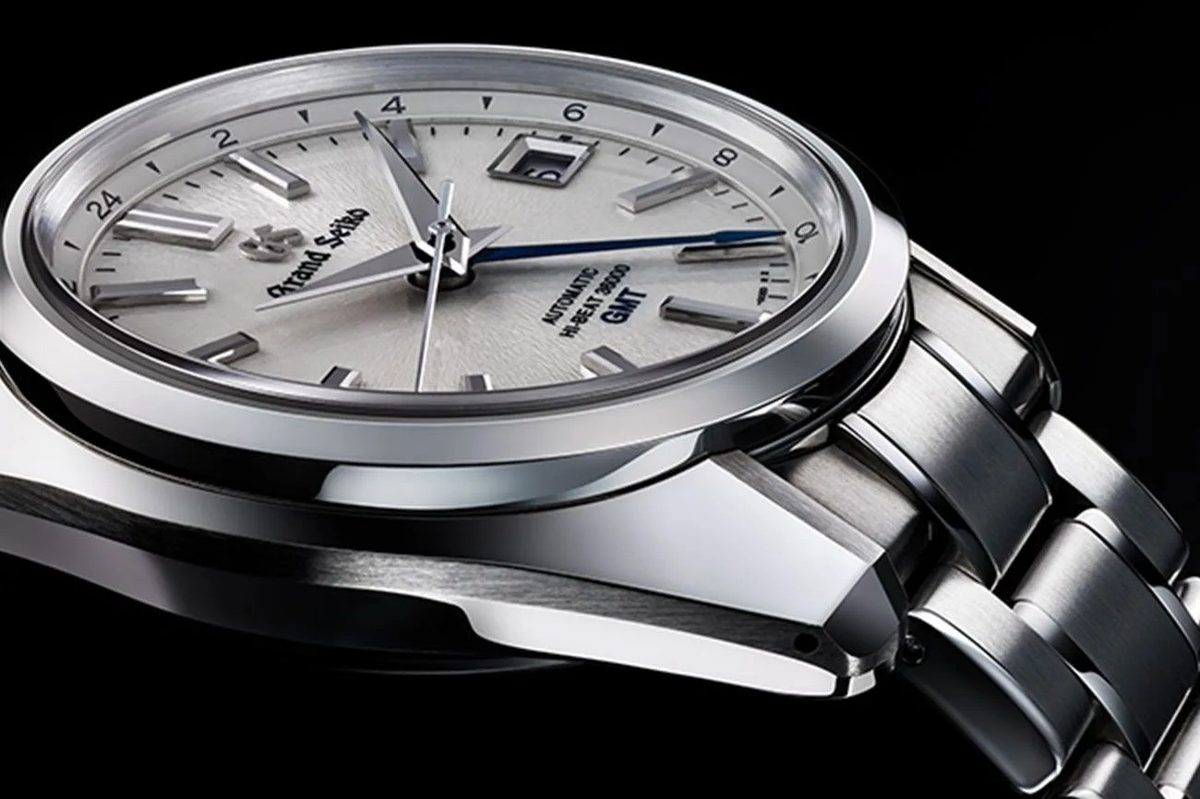
Pick up a Grand Seiko and angle it under a light source. The flat surfaces on the case reflect like liquid mercury — perfectly flat, distortion-free, with edges so crisp they look machined to laser tolerances. Now pick up a Swiss watch at three times the price and try the same thing. The surfaces are polished, sure. But they are not flat in the same way. They bulge slightly at the edges, rounding where the polishing wheel could not maintain a consistent angle. That difference — invisible in photos, unmistakable in hand — is Zaratsu polishing.
Zaratsu is not a brand name or a marketing term. It is a polishing technique adapted from the Sallaz polishing machines originally developed in Germany for optical lens grinding. The name “Zaratsu” is a Japanese phonetic rendering of “Sallaz.” Seiko acquired and modified these machines in the 1960s, and a handful of trained artisans at the Shizukuishi and Shinshu studios still use them today. The king seiko collector guide often begins here because understanding Zaratsu is the key to understanding why Japanese finishing commands the respect it does among serious collectors.

What Makes Zaratsu Different from Standard Polishing
Standard watch case polishing uses rotating wheels or belts. The polisher holds the case against the spinning surface and moves it to distribute the abrasion evenly. The problem is control: the polisher’s hands introduce micro-variations, and the spinning surface tends to round over edges. The resulting finish is bright and shiny, but under magnification or raking light, you can see subtle waviness and edge softening. For most watches, this is perfectly acceptable.
Zaratsu uses a flat, spinning tin plate. The watch case is pressed against this plate at a precise angle — the critical variable. The flat plate maintains surface planarity that a flexible belt or wheel cannot achieve. But the technique only works if the operator holds the case at exactly the right pressure and angle for the entire polishing pass. Too much pressure rounds the edges. Too little leaves imperfections. The wrong angle creates a convex surface instead of a flat one. There is no fixture or jig to automate this — it is pure hand skill guided by tactile feedback.
Training takes five to ten years. Not because the concept is complicated — it is straightforward in theory — but because the hand control required is extraordinarily demanding. The polisher must feel micron-level differences through their fingertips while maintaining consistent pressure on a spinning plate. It is closer to surgery than manufacturing. Seiko reportedly has fewer than a dozen fully qualified Zaratsu polishers across all their studios.
Technical Detail: The Zaratsu technique produces surfaces with flatness measured in fractions of a micron — less than 1/1000th of a millimeter of deviation across the polished face. This is why Zaratsu-polished surfaces act as near-perfect mirrors: light reflects uniformly off the entire surface rather than scattering from microscopic undulations. The human eye perceives this as a “wet” or “liquid” quality distinct from conventional polish.
The Grand Seiko Philosophy: Grammar of Design
Zaratsu polishing does not exist in isolation. It is one element of what Grand Seiko calls the “Grammar of Design” — a set of aesthetic principles established by designer Taro Tanaka in 1967 with the 44GS model. The Grammar specifies flat surfaces, sharp ridgelines, and play of light between polished and brushed finishes. Without Zaratsu, the Grammar would be impossible to execute because conventional polishing cannot produce the flat surfaces and crisp transitions that the design language demands.
Tanaka’s insight was that a watch case should interact with light the way a cut gemstone does — through controlled reflection and refraction from precisely angled planes. A Grand Seiko case has flat polished surfaces that act as mirrors, brushed surfaces that scatter light softly, and razor-sharp ridgelines where the two textures meet. The contrast between these zones creates visual depth that makes the watch appear to change character as it moves on the wrist. In direct light, it blazes. In shade, it goes quiet and subtle. This dynamic quality is what collectors describe as “alive.”
The king seiko collector guide always draws a line between King Seiko and Grand Seiko finishing because the two brands occupy different tiers within the same philosophy. King Seiko watches receive high-quality polishing, but not all surfaces are Zaratsu-finished. Grand Seiko Heritage Collection models receive Zaratsu treatment on all mirror-polished surfaces without exception. The difference is detectable under close inspection but requires trained eyes to spot in casual observation.
King Seiko: The Forgotten Rival Reborn
Any king seiko collector guide has to address the brand’s unusual history. King Seiko was born from an internal rivalry within Seiko. In the 1960s, Seiko’s two main factories — the Suwa facility (which became Seiko Epson) and the Daini Seikosha facility in Tokyo — competed fiercely to produce the best watches. The Suwa factory created Grand Seiko. The Daini factory responded with King Seiko. For about a decade, the two lines pushed each other to extraordinary levels of quality and precision.
King Seiko watches from the 1960s and early 1970s are among the finest mechanical watches Japan ever produced. The KSK (King Seiko Kurosu, or “Chronometer” model) and the 45KS with its hand-finished 45 caliber movement competed directly with Swiss chronometer-grade watches — and often won. The cases were beautifully proportioned, with sharp lines and polished surfaces that showed clear family resemblance to Grand Seiko’s Grammar of Design.
The quartz crisis killed King Seiko in 1975. Seiko shifted resources to quartz technology, and the mechanical King Seiko line was discontinued. For decades, vintage King Seiko watches were Japan-only collector items, virtually unknown in Western markets. Then in 2021, Seiko revived the King Seiko brand as a mid-range line positioned between Presage and Grand Seiko — offering many of the same design principles at a more accessible price point.
Beyond Seiko: Zaratsu in the Wider Japanese Industry
While Zaratsu is most associated with Grand Seiko, the technique — or variations of it — appears in other segments of Japanese manufacturing. The underlying principle of flat-plate polishing for optical-grade surfaces originates in lens making and precision instrument manufacturing. Japanese knife makers use similar techniques to achieve the mirror finishes on high-end kitchen knives. The shared philosophy is the same: flatness is not just aesthetic, it is functional.
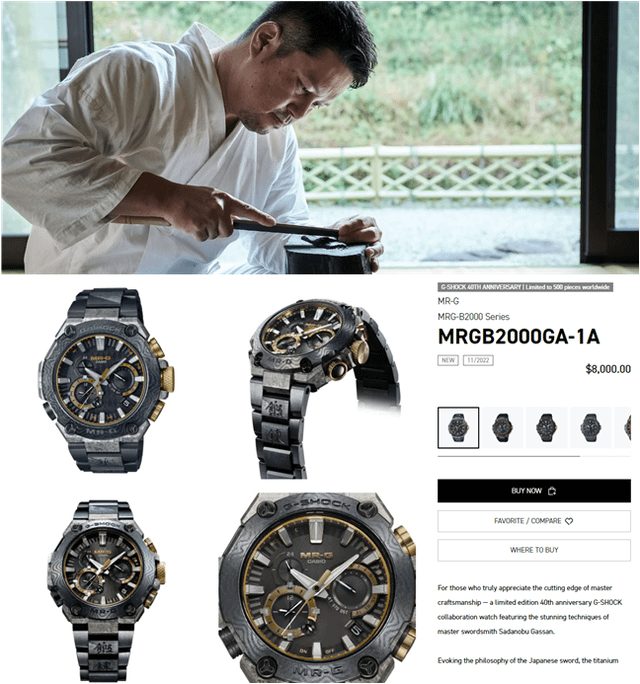
Citizen’s high-end line, The Citizen, employs polishing techniques that, while not called Zaratsu (the term is effectively Seiko’s), produce similar results. The super-titanium cases on Citizen’s Chronomaster models show mirror surfaces and sharp edges that reflect Zaratsu-level attention to finish. Casio’s Oceanus line, built at their Yamagata factory, also demonstrates Japanese flat-surface polishing on titanium — a material that is notoriously difficult to polish to mirror grade because of its grain structure.
The broader point is that Zaratsu represents a Japanese approach to craftsmanship that transcends any single brand or product. The concept — that a surface should be polished not just until it shines, but until it achieves geometric perfection — reflects the Japanese aesthetic of “monozukuri” (the art of making things). In this philosophy, the process matters as much as the result. A flat surface achieved through ten years of hand training carries meaning that a machine-polished surface does not, even if the two are optically identical.
Collector Perspective: When evaluating a king seiko collector guide recommendation, pay attention to case finishing before anything else. A well-finished King Seiko from the late 1960s — with its original case unpolished by amateur hands — shows finishing quality that rivals Swiss watches costing five to ten times more. The moment you see a crisp lug edge catching light on a 50-year-old case, you understand what Japanese watchmaking was doing when the rest of the world was not paying attention.
How Zaratsu Compares to Swiss Finishing Standards
The Swiss watch industry dominates the conversation about finishing, but the comparison with Japanese methods is more nuanced than most discussions suggest. Swiss case finishing — even at the highest levels (Patek Philippe, Vacheron Constantin, A. Lange and Sohne) — tends to emphasize hand-applied anglage (beveling) and satin brushing. Mirror polishing exists but is often secondary to beveled edges and multi-surface texture work.
Grand Seiko’s approach inverts this priority. Flat mirror surfaces are the primary design element, with brushed surfaces and ridgelines serving as contrast elements. The result is a different visual vocabulary. A Patek Philippe case looks sculpted — organic curves, flowing transitions, soft reflections. A Grand Seiko case looks architectural — flat planes, sharp angles, hard reflections. Neither is objectively better. They are different aesthetic traditions expressing different cultural values.
The price-to-finishing ratio is where Japanese watchmaking makes its strongest argument. A Grand Seiko Heritage Collection at $5,000-6,000 offers case finishing that legitimately competes with Swiss watches at $30,000-50,000. This is not hyperbole — it is a claim that has been validated by countless independent comparisons from watch journalists, collectors, and even Swiss industry insiders who have publicly acknowledged Grand Seiko’s finishing advantage at its price point.
Collecting Japanese Watches: Where to Start
For someone entering the Japanese watch collecting space, the king seiko collector guide trajectory typically follows a natural progression. Start with a modern King Seiko (approximately $1,500-3,000) to experience the design language and basic Japanese finishing. Move to a Grand Seiko Heritage model ($4,000-7,000) to experience full Zaratsu treatment. Then, when your eye is trained and you know what to look for, explore vintage King Seiko and Grand Seiko pieces from the 1960s-70s where the finishing is often remarkable for the era.
Vintage Japanese watches present unique challenges. The domestic Japanese market was the primary audience, so documentation is often in Japanese only. Service history is rarely recorded in ways Western collectors expect. And the biggest risk: amateur re-polishing. A vintage King Seiko with its original, unpolished case — showing natural wear but retaining crisp lug edges — is worth significantly more than one that has been polished by a local jeweler who rounded the edges trying to remove scratches. Once Zaratsu-level edges are polished away, they cannot be restored.
Buying from Japanese domestic sellers (via platforms like Yahoo Japan Auctions through proxy services, or from established Japanese watch dealers) often yields better examples than Western marketplaces. Japan’s culture of careful ownership means vintage watches are frequently found in remarkable condition — original boxes, papers, even the hang tags. A 1968 King Seiko purchased from a Japanese estate sale may arrive looking like it spent fifty years in a safe rather than on a wrist.
Buying Tip: When evaluating any king seiko collector guide recommendation, always ask to see macro photos of the lug edges. Sharp, well-defined ridgelines where polished surfaces meet brushed surfaces are the hallmark of an unpolished case. If the ridgelines are soft or rounded, the case has been re-polished — reducing both its authenticity and its value to collectors who prize original finishing.
The Future of Japanese Finishing
Seiko faces a succession problem. The master polishers who can perform Zaratsu at the highest level are aging, and the apprenticeship pipeline produces new masters slowly. Training a Zaratsu polisher takes nearly a decade — there is no shortcut, no simulation, no way to accelerate the development of the hand sensitivity required. If production demand outpaces the supply of trained artisans, something has to give: either production volumes stay limited, or finishing standards drop for some product tiers.
Grand Seiko has chosen the first path so far. Production numbers remain modest compared to the mass-market Seiko brand, and Zaratsu-finished watches command waiting lists at authorized dealers. The revival of King Seiko as a mid-tier brand may partly address the demand gap — offering watches with excellent (but not full Zaratsu) finishing at lower price points, preserving the top-tier technique for Grand Seiko’s flagship models.
The question collectors debate is whether machine learning and robotic polishing could eventually replicate Zaratsu results. Current robotic polishing can produce excellent mirror finishes, but maintaining absolute flatness across complex multi-plane case geometries while preserving knife-edge transitions remains beyond automated capability. The human hand’s ability to adjust pressure in real time based on tactile feedback — feeling when the case is flat versus slightly convex — is the gap that robots have not closed. For now, Zaratsu remains a human art, and that scarcity is part of its value proposition.
Japanese watchmaking’s influence on the global industry continues to grow. Swiss brands are paying closer attention to case finishing as collectors become more educated about what constitutes excellent polishing. The conversation has shifted from “is Japanese finishing as good as Swiss?” to “in what ways is Japanese finishing different from Swiss?” — a much more respectful and accurate framing. Zaratsu polishing is not trying to be Swiss finishing done differently. It is its own tradition, with its own standards, producing results that stand on their own merits.
Frequently Asked Questions
What exactly is Zaratsu polishing?
Zaratsu is a hand-polishing technique using a flat, rotating tin plate. The watch case is pressed against this plate at precise angles to produce mirror-flat surfaces with sub-micron deviation. The name derives from the German “Sallaz” polishing machines that Seiko adapted in the 1960s. It requires 5-10 years of apprenticeship to master and cannot be replicated by machines due to the tactile sensitivity required.
Do all Grand Seiko watches have Zaratsu polishing?
Most Grand Seiko Heritage Collection models feature Zaratsu-polished surfaces on their mirror-finished case facets. Sport and diver models may use Zaratsu on select surfaces but not all. The extent of Zaratsu finishing varies by reference. As a general rule, the more traditionally styled Heritage models receive the most extensive Zaratsu treatment.
How does King Seiko finishing compare to Grand Seiko?
Modern King Seiko watches offer excellent polishing that follows the same design grammar as Grand Seiko — flat planes, crisp edges, contrast between polished and brushed surfaces. However, King Seiko does not receive full Zaratsu treatment on all surfaces. The finishing is a step below Grand Seiko’s top tier but significantly above most competitors at the $1,500-3,000 price range. A king seiko collector guide typically positions them as an entry point into Japanese luxury finishing.
Can a watchmaker re-Zaratsu polish a scratched Grand Seiko case?
Only Seiko’s own service centers with trained Zaratsu polishers can restore Zaratsu finishing. A local watchmaker can polish out scratches, but they will round the edges and lose the flat-surface precision that defines Zaratsu. Seiko offers factory case refinishing as part of their service program, though it adds cost and turnaround time. Many collectors accept light scratches rather than risk losing original case geometry.
What should I look for when buying a vintage King Seiko?
Prioritize original, unpolished cases — check lug edges for sharpness. Verify the dial is original (no repainted dials or aftermarket replacements). Confirm the movement matches the model (reference numbers are stamped on the caseback). Buy from Japanese sellers when possible for better condition examples. Expect to pay $500-2,000 for desirable references in good original condition.
Zaratsu polishing is more than a technique — it is a statement about what Japanese watchmaking values. Precision pursued to the point of art. Surfaces polished not to a standard, but to a physical limit. A tradition maintained through decade-long apprenticeships when automation would be cheaper and faster. In a world that optimizes for efficiency, Zaratsu optimizes for perfection. That commitment is why a Grand Seiko case catches light like no other watch on Earth, and why the king seiko collector guide keeps growing with every new enthusiast who picks one up and angles it toward a window.
Explore more about Japanese horology on our blog, discover our story on the about page, or browse our collection in the shop.