
Uncategorized
Japanese Watchmaking Philosophy Zaratsu Polishing Beyond
Apr
Japanese Watchmaking Philosophy: Zaratsu Polishing & Beyond

I first handled a Grand Seiko 44GS reissue at a collector meetup in Tokyo in 2018, and the experience recalibrated my understanding of what a watch case could be. I had spent years examining Swiss finishing — Patek Philippe’s mirror-polished bevels, A. Lange’s hand-engraved balances, Vacheron’s Geneva stripes. All stunning. But the 44GS was doing something different. The flat surfaces were not just polished — they were mathematically flat, with edges so sharp they appeared to slice the light rather than reflect it. No distortion. No waviness. Just pure geometry rendered in steel.
That quality — the intersection of obsessive craftsmanship and design philosophy — is what separates Japanese watchmaking from its Swiss counterpart. The Swiss perfect what exists. The Japanese reimagine what is possible. And it all traces back to two things: a polishing technique called Zaratsu and a 1967 design language that Grand Seiko simply calls “the Grammar of Design.”
The Grammar of Design: Nine Rules That Changed Everything
In 1967, Taro Tanaka — a designer at Suwa Seikosha (the division that produced Grand Seiko) — sat down and codified what would become the most influential design language in Japanese horology. His creation, the Grand Seiko 44GS, was not just a new watch model. It was a manifesto in metal, expressing nine design principles that every Grand Seiko would follow for the next six decades and counting.
The nine elements of the Grammar of Design: a flat dial surface, a flat and distortion-free case surface, sharp edges between surfaces (no rounded transitions), a balance between light and shadow created by those edges, flat surfaces on the bezel, three-dimensional hour markers with faceted tops, wide and flat hands with light-catching surfaces, a balanced overall profile when viewed from the side, and a size appropriate for the Japanese wrist (which in 1967 meant 36mm — modest by modern standards but perfect for showcasing the polishing techniques).
What makes these principles remarkable is their focus on light interaction. Every decision — flat surfaces, sharp edges, faceted indices — is about controlling how the watch catches and redirects light. A rounded edge creates a gradual transition from bright to dark. A sharp Zaratsu-polished edge creates an instant transition — a hard line of contrast that the human eye reads as precision. This is not decoration. It is optical engineering applied to aesthetics.
Design Principle: The Grammar of Design is not about what a watch looks like in photographs. It is about what a watch does to light in three-dimensional space. Photographs flatten the experience. You cannot fully appreciate a 44GS-inspired case until you tilt it under a direct light source and watch the polished planes snap between mirror-bright and shadow-dark with zero gradual transition. That snap is the signature.
Zaratsu Polishing: The Technique Behind the Surface
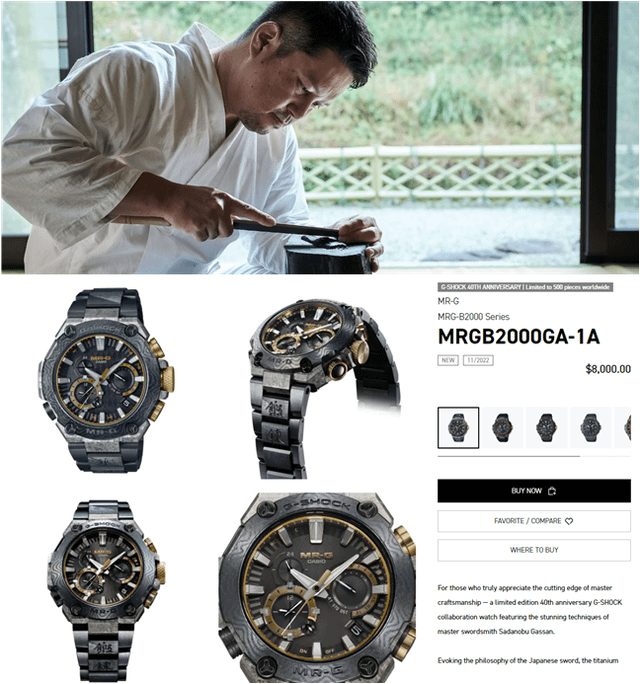
Zaratsu polishing (also spelled “Sallaz” — from the German company Sallaz whose equipment inspired the technique) is a method of polishing flat surfaces on a spinning tin plate. The watch component is held against the plate by hand — no jig, no fixture, just the artisan’s fingers and judgment. The pressure must be perfectly even. The angle must be perfectly flat. Any tilt, any inconsistency, creates a curve or distortion in the finished surface.
The technique was adapted for watchmaking by Seiko artisans in the 1960s, but its origins are in sword polishing — the Japanese tradition of creating mirror-flat surfaces on katana blades. The connection is not accidental. Japan has a centuries-old culture of surface finishing that treats polishing as a high art rather than a final manufacturing step. Sword polishers (togishi) spend 10-15 years in apprenticeship. Zaratsu watch polishers follow a similar path — Grand Seiko estimates that it takes approximately a decade of daily practice before a polisher can consistently produce surfaces that meet the company’s quality standard.
What makes Zaratsu different from conventional watch polishing? Standard mirror polishing uses buffing wheels and compounds — the component is held against a spinning cotton or felt wheel charged with polishing paste. This produces a bright surface, but it rounds edges and creates subtle undulations because the flexible wheel conforms to the component’s shape. Zaratsu uses a rigid tin plate — the surface stays flat because the plate stays flat. Edges stay sharp because the polisher stops the stroke at the edge rather than rolling over it.
The result is surfaces that are distortion-free when viewed at any angle. Hold a Zaratsu-polished case under a fluorescent light and the reflected line will be perfectly straight across the entire surface. Do the same with a buffed Swiss case and you will see waviness — subtle, perhaps attractive, but imprecise. That difference in precision is the difference between decoration and engineering.
The 44GS: Where Philosophy Became Physical
The original Grand Seiko 44GS (reference 4420-9000), released in 1967, was a 36.2mm stainless steel watch powered by the hand-wound caliber 4520A. By the specifications, it was unremarkable — 18,000 bph, 45-hour power reserve, date complication, water-resistant caseback. Dozens of Swiss watches offered the same on paper.
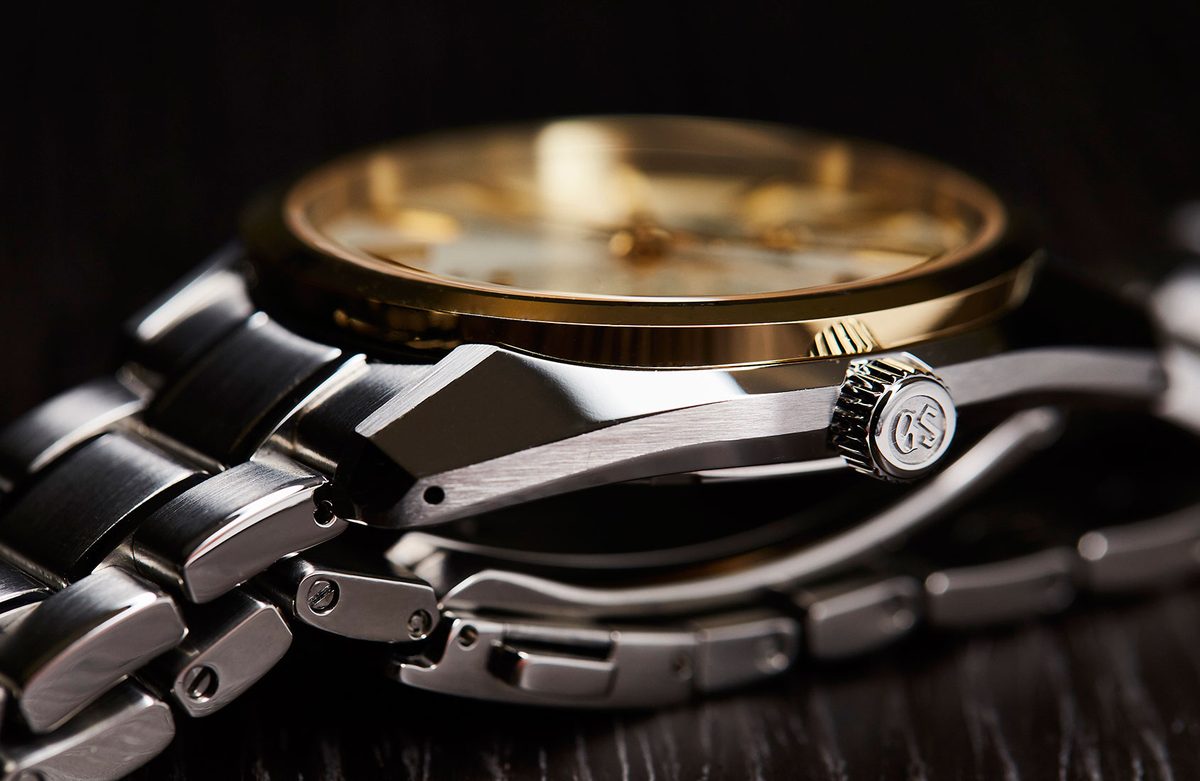
What set it apart was the case. Nine distinct surfaces — top of each lug, sides of each lug, bezel top, bezel sides, caseback — all individually Zaratsu polished and then assembled so that every edge between surfaces formed a crisp, unbroken line. The visual effect was architectural: the watch looked like it had been machined from a single block of steel, not assembled from separate components. Each surface was either perfectly mirror-polished or finished with a directional hairline brush — and the transitions between the two finishes were as sharp as the edges between surfaces.
The dial was equally considered. Applied hour markers (not printed) with Zaratsu-polished tops that caught light independently of the case. Dauphine hands with flat, polished surfaces that read like miniature mirrors. The overall impression was of a watch that had been finished to a level usually reserved for movement components — the exterior received the same attention Swiss manufacturers typically gave only to the movement visible through a display caseback.
Collector Note: Original 1967 44GS watches are extremely rare. Production numbers were limited, and surviving examples in good condition command prices of $5,000-$15,000 depending on dial condition and case sharpness. The edges are the first thing to deteriorate — re-polishing a 44GS case without losing edge definition requires a Zaratsu-trained artisan, and finding one outside of Japan is nearly impossible.
Beyond Zaratsu: Spring Drive and the Pursuit of Perfection
Japanese watchmaking philosophy extends far beyond surface finishing. The same perfectionist mindset that produced Zaratsu polishing also produced Spring Drive — a movement technology that has no direct equivalent in Swiss horology.
Spring Drive was conceived in 1977 by Yoshikazu Akahane, a young Seiko engineer who asked a question that Swiss watchmakers had never considered: what if a mechanical movement could regulate itself electronically without a battery? The concept took 22 years to bring to production — Spring Drive launched in 1999 — and the result is a movement that uses a mainspring for power (like a mechanical watch), a gear train to transmit that power (like a mechanical watch), but replaces the escapement with a tri-synchro regulator that uses a quartz crystal oscillator and an integrated circuit to control the speed of the glide wheel.
The practical result is accuracy of ±1 second per day (compared to ±5-10 seconds for a good mechanical watch) with the sweeping hand motion of a high-frequency mechanical — except it is not stepping or beating. The Spring Drive seconds hand glides. It moves with absolute smoothness because there is no escapement creating the tick-tick-tick impulse. That glide is mesmerizing in person and impossible to replicate with any other technology currently in production.
The philosophical result is more interesting. Spring Drive embodies the Japanese concept of “kaizen” — continuous improvement — taken to its logical extreme. Rather than accepting that mechanical watches must be less accurate than quartz (a tradeoff the Swiss industry accepts as the “charm” of mechanical watchmaking), Seiko’s engineers spent two decades eliminating the tradeoff entirely. The Spring Drive is as accurate as quartz, as beautiful as mechanical, and as original as neither.
The Micro Artist Studio: Where Handcraft Reaches Its Limit
In the mountains of Nagano Prefecture, in the town of Shiojiri, Grand Seiko operates a facility called the Micro Artist Studio. This is where the highest-end Grand Seiko pieces are produced — watches with enamel dials, hand-engraved movements, and case finishing that takes individual artisans weeks to complete.
The Micro Artist Studio produces fewer than 200 watches per year. Each watch passes through the hands of a single artisan who is responsible for the entire finishing process — case polishing, dial assembly, movement decoration, and final quality inspection. This is different from the Swiss approach, where finishing tasks are typically divided among specialists (one person does anglage, another does Geneva stripes, a third does mirror polishing). The Japanese approach treats the finished watch as a single artistic expression by one person.
The enameling process is particularly demanding. Grand Seiko’s enamel dials use a technique adapted from traditional Arita porcelain — layers of powdered glass are applied to a copper dial blank and fired in a kiln at 800°C. Each firing risks cracking, bubbling, or color inconsistency. Seven to ten firings are typical, and the rejection rate exceeds 50%. The surviving dials have a depth and luminosity that painted or lacquered dials cannot match — light enters the translucent enamel layers, reflects off the underlying metal, and returns to the eye with a warmth that photographs consistently fail to capture.
Japanese vs. Swiss: A False Competition
The temptation to frame Japanese and Swiss watchmaking as rivals is understandable but misleading. They are not trying to do the same thing. Swiss haute horlogerie prioritizes tradition — complications that were invented centuries ago, finishing techniques passed down through guilds, and brand legacies measured in generations. Japanese watchmaking prioritizes improvement — making things more precise, more efficient, more beautiful than they were last year.
Grand Seiko’s vertical integration is worth emphasizing. Seiko produces its own quartz crystals, its own hairsprings (using a proprietary alloy called Spron), its own lubricants, its own cases, dials, hands, and movements. Very few Swiss brands can claim the same level of in-house capability. Rolex comes closest, but even Rolex sources some materials externally. This integration gives Grand Seiko control over every variable — a control that shows in the consistency of the finished product.
Industry Perspective: In 2010, Grand Seiko was largely unknown outside Japan and specialist collector circles. By 2025, it was competing directly with Rolex and Omega in the $5,000-$10,000 segment and with Patek Philippe and A. Lange in the $20,000+ segment. This rise happened without celebrity endorsements or sports sponsorships — purely on the basis of product quality and word-of-mouth among collectors. The 44GS design language was the foundation of that ascent.
Collecting Grand Seiko: What to Know
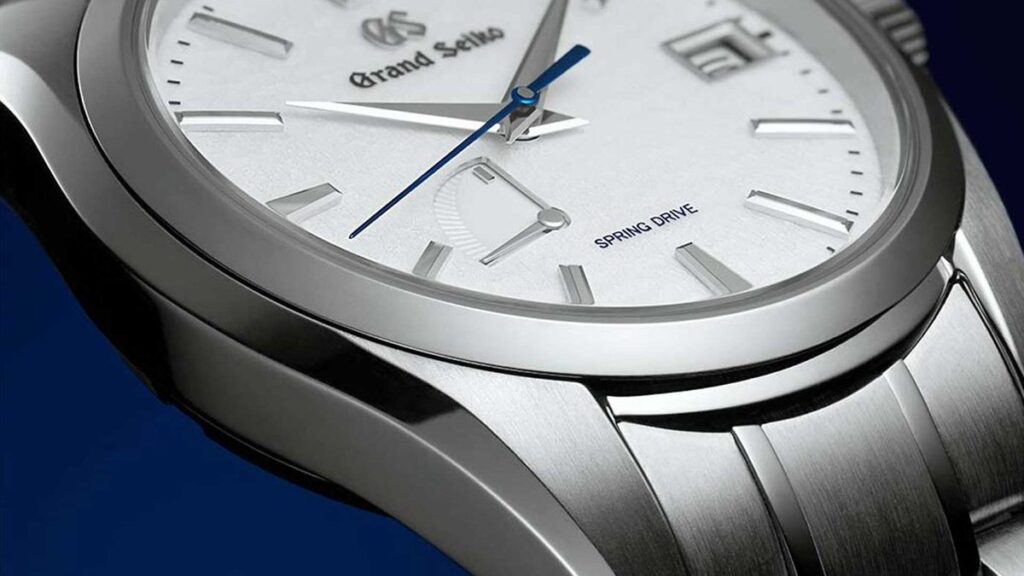
For collectors considering their first Grand Seiko, the entry point matters. The current Heritage Collection (SBGA211 “Snowflake” is the perennial recommendation) showcases Spring Drive technology and textured dial work in the $5,000-$6,000 range. The Evolution 9 Collection applies the Grammar of Design principles in modern proportions (40-41mm) with updated case shapes that maintain Zaratsu polishing standards.
Vintage Grand Seiko 44GS models are an entirely different collecting category. The original 1967-1970 production runs are scarce, with authentic examples requiring careful verification of dial, case, and movement matching. Later reissues (the SBGW047 and SBGW253) capture the design language with modern manufacturing precision but lack the historical cachet of the originals. Either way, the case finishing should be the primary focus of evaluation — a 44GS with re-polished, rounded edges has lost its essential character.
The secondary market for Grand Seiko has strengthened consistently since the brand separated from Seiko’s consumer line in 2017. Resale values hold at 60-80% of retail for current models — better than most Swiss brands outside of Rolex, Patek, and Audemars Piguet. Limited editions from the Micro Artist Studio appreciate above retail almost immediately. For those interested in exploring Grand Seiko and other Japanese pieces, visit our shop, browse collector stories on our blog, or learn more about us.
The Future of Japanese Watchmaking
Citizen’s acquisition of La Joux-Perret (a Swiss movement manufacturer) and Seiko’s continued investment in both Spring Drive and mechanical Hi-Beat technology signal that Japanese watchmaking is not satisfied with its current position. The next frontier is high complications — minute repeaters, tourbillons, and grand complications — territory that Swiss brands have dominated for centuries.
Grand Seiko’s Kodo Constant-force Tourbillon (released in 2022) was a statement piece: a tourbillon with constant-force mechanism that achieved accuracy of +5/-3 seconds per month — far exceeding what any Swiss tourbillon delivers. Only 20 were made, at a price exceeding $400,000, but the technical message was clear: Japanese watchmaking can compete at every level, including the very top.
The question is not whether Japanese watchmaking will rival Swiss watchmaking. It already does, and in certain areas — case finishing, accuracy, and vertical integration — it exceeds it. The real question is whether the broader market will recognize this. As more collectors handle a Zaratsu-polished case alongside a Swiss buffed equivalent, and as more enthusiasts experience the Spring Drive glide alongside a mechanical sweep, the answer becomes self-evident. Quality speaks for itself. It just sometimes takes a few decades for everyone to listen.
Frequently Asked Questions
Q: What makes the Grand Seiko 44GS design so significant?
The 44GS established the “Grammar of Design” — nine principles focused on flat surfaces, sharp edges, and light interaction that define every Grand Seiko produced since 1967. It was the first watch design to treat case finishing as an equal partner to movement finishing, and its Zaratsu polishing standard set a benchmark that Swiss brands are only now beginning to match.
Q: How is Zaratsu polishing different from regular mirror polishing?
Zaratsu uses a rigid flat tin plate rather than a flexible buffing wheel. The artisan holds the component by hand against the spinning plate, maintaining perfectly even pressure. This produces distortion-free flat surfaces with razor-sharp edges — something a buffing wheel cannot achieve because its flexibility rounds edges and creates subtle surface waviness.
Q: Is Grand Seiko as good as Rolex or Omega?
In case finishing, Grand Seiko exceeds both — Zaratsu polishing produces surfaces that neither Rolex nor Omega matches at any price point. In movement accuracy, Grand Seiko’s Spring Drive (+/- 1 second per day) outperforms Rolex’s Superlative Chronometer specification (+/- 2 seconds per day). In brand recognition and resale value, Rolex still dominates. “As good as” depends entirely on which qualities you prioritize.
Q: What is Spring Drive and why does it matter?
Spring Drive is a movement technology unique to Seiko/Grand Seiko. It uses a mainspring for power (like a mechanical watch) but regulates timekeeping with a quartz crystal oscillator (like a quartz watch). The result is mechanical-level craftsmanship with quartz-level accuracy, plus a perfectly smooth sweeping seconds hand with no stepping or ticking. No other manufacturer produces anything similar.
Q: Where should I start if I want to collect Grand Seiko?
The SBGA211 “Snowflake” is the classic entry point — Spring Drive movement, titanium case, and the iconic textured dial that changes appearance with every angle of light. For a pure Grammar of Design experience, look at the Heritage Collection models with 44GS-inspired cases (SBGW231 or SBGW253). For vintage, start by studying dial and case variants on collector forums before buying — authentication knowledge is essential in the pre-owned market.