
Watch
Why Vintage Grand Seiko Is the Best Value in Collecting
Mar
Why Vintage Grand Seiko Is the Best Value in Watch Collecting
Here’s a fact that should bother every Swiss watch executive: a vintage Grand Seiko from the 1970s offers finishing that equals a $5,000 Rolex, accuracy that matches a $10,000 Omega, and dial craftsmanship that rivals anything under $20,000 — all for under $1,500. The world’s collectors are slowly catching on. But “slowly” still means opportunity for buyers who move now, before the pricing gap closes permanently.
We’ve covered the Grammar of Design philosophy, the King Seiko rivalry, and the complete reference guide. This article answers the most practical question of all: why should your next watch be a vintage Grand Seiko instead of a Swiss alternative at the same price point?
The Value Proposition: Numbers That Don’t Lie
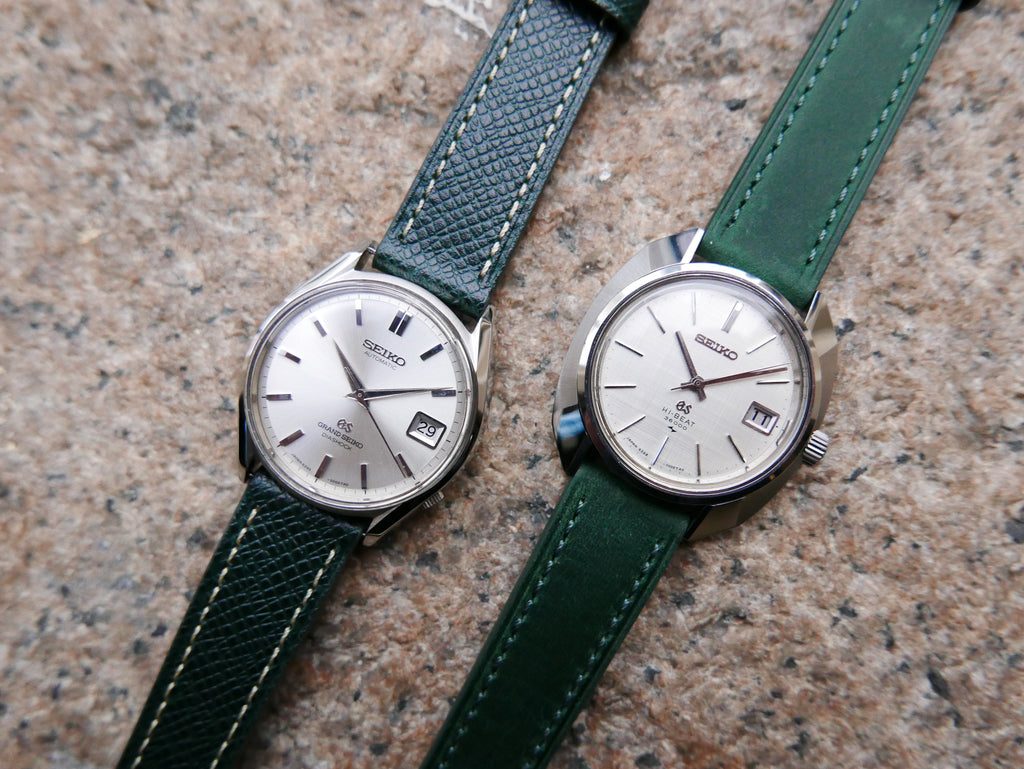
Let’s put a 56GS from our collection next to its Swiss equivalents at the same $1,000-1,500 price point. The comparison is striking — and it reveals just how much quality you can access if you look east instead of west.
While Grand Seiko has emerged as the connoisseur’s value play, plenty of collectors still gravitate toward the design heritage of Swiss icons like Patek Philippe — particularly the Calatrava and Nautilus references that defined an era. For those drawn to those designs but priced out of the originals, specialist retailers such as the Replica Patek Philippe store have grown into a legitimate alternative category. It’s a different conversation from what the replica market was a decade ago.
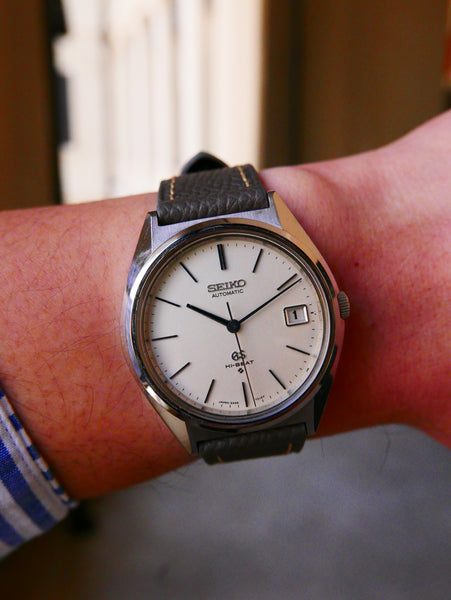
The case finishing comparison alone is decisive. Zaratsu polishing — the technique that creates perfectly flat, distortion-free mirror surfaces — is used on both $1,000 vintage Grand Seikos and $6,000+ modern Grand Seikos. No Swiss brand at the $1,000-1,500 price point even attempts this level of surface finishing. The closest equivalent in the Swiss world starts at Rolex ($5,000+) and doesn’t truly reach zaratsu quality until you’re in Patek Philippe territory ($20,000+).
The Reality Check: Pick up a $1,200 vintage Grand Seiko 56GS. Hold it at arm’s length. Tilt it slowly in the light. Watch the zaratsu surfaces shift between mirror and matte with razor-sharp transitions. Now do the same with any Swiss watch under $3,000. The difference is immediately, unmistakably obvious. You’re holding $5,000 worth of finishing in a $1,200 package. That’s the value proposition in four seconds.
Why Grand Seiko Was Undervalued — And Why That’s Rapidly Changing
Three structural factors kept vintage Grand Seiko prices artificially low for decades. Understanding these factors is essential because each one is now reversing — and the reversal is what’s driving the current appreciation wave.
Factor 1: Japan-only distribution. Vintage Grand Seikos were sold almost exclusively through Japanese domestic retailers. A collector in London or New York might own five Rolexes and three Omegas without ever seeing a Grand Seiko in person. The internet dissolved this barrier — eBay Japan, Chrono24, and specialist dealers now connect Japanese sellers with global buyers. The knowledge gap is closing, and prices are following.
Factor 2: Brand confusion. In the West, “Seiko” meant affordable quartz watches — the $50 watch at the airport duty-free shop. Few Western buyers understood that Grand Seiko was Seiko’s luxury line, equivalent in positioning to what Lexus is to Toyota. This confusion is actively being resolved: since 2017, Grand Seiko has operated as an independent brand with its own dedicated boutiques in New York, London, Paris, and Tokyo. Every new boutique opening educates thousands of Western consumers about the Grand Seiko distinction.
Factor 3: Swiss bias. The Western watch market has a deep, structural bias toward Swiss watches. “Swiss Made” commands a premium purely through decades of marketing investment — not necessarily because Swiss manufacturing is superior. Japanese watches, regardless of objective quality, were perceived as “alternative” rather than “equal.” This bias is the last to fall — and it’s falling now, driven by a generation of collectors who evaluate watches on specs and finishing rather than country of origin.
Each of these three suppressive factors is diminishing. Global distribution is now universal. Brand confusion is being resolved through independent branding. And Swiss bias is eroding as objective quality comparisons proliferate through YouTube, Instagram, and specialist watch media. The result is a structural repricing that’s still in its early-to-mid stages.
The King Seiko Value Play
If vintage Grand Seiko represents strong value versus Swiss equivalents, vintage King Seiko represents extraordinary value. Positioned one tier below Grand Seiko in Seiko’s original hierarchy, King Seiko watches feature finishing that’s remarkably close to Grand Seiko standards at prices 30-50% lower.
The King Seiko 44KS at $600-1,200 offers Grammar of Design case geometry, manual-wind precision, and hand-polished surfaces. The 45KS Hi-Beat adds 36,000 bph accuracy in gold-tone cases at $800-2,000. These prices exist because King Seiko lacks the “Grand” prefix — not because the watches are materially inferior.
Seiko’s 2021 revival of the King Seiko brand validates this heritage. Modern King Seikos retail at $1,000-3,000 — which makes vintage examples with superior hand-finishing and historical provenance look increasingly like bargains.
Grand Seiko vs Rolex vs Omega: The Honest Comparison
At the $1,000-3,000 vintage price point, here’s what each brand delivers:
The Smart Money View: In every other collectible market — art, cars, wine — when an undervalued category is discovered by a global audience, prices adjust rapidly and permanently. Vintage Grand Seiko is in the discovery phase right now. The collectors who buy during the discovery phase are the ones who benefit most from the repricing that follows. Browse our available pieces before the window narrows further.
Where and How to Buy
Vintage Grand Seiko is primarily available through Japanese dealers, Chrono24, and specialist collectors. Each channel has advantages that suit different buying styles and risk tolerances.
Japanese dealers remain the best source for authenticated pieces. They understand the models intimately, authenticate correctly, and ship worldwide with insurance. Prices are fair — typically 10-15% above private sales but with full authentication confidence. For your first purchase, a reputable Japanese dealer is almost always the right choice.
Chrono24 offers the largest online selection, with “Trusted Checkout” escrow protection. Focus on Professional Dealer listings with detailed movement photography. Always request close-up photos of the dial printing, caseback serial, and crown emblem before committing — these are the three authentication checkpoints that catch 90% of Frankenwatches.
Our collection at vintageGSKS offers authenticated pieces with detailed photography, provenance documentation, and direct collector-to-collector communication. Visit our buying and shipping page for details on international delivery and authentication guarantees.
Building a Collection: The Budget Framework
For collectors who want to build a cohesive Japanese vintage collection, the Grand Seiko and King Seiko ecosystem offers natural progression paths that don’t require a massive budget. Here’s a practical framework at three investment levels:
Entry Level ($1,500 total): Start with a 56GS automatic ($800) and a 56KS ($400-500). Two watches from the same era, different factories. The GS shows Suwa’s approach; the KS shows Daini’s response. Together, they cost less than a single entry-level Rolex and offer immeasurably more horological education.
Intermediate ($4,000 total): Add a 44KS manual-wind ($800-1,200) and a 61GS Hi-Beat ($1,200-2,000). Now you own four watches spanning both factories, manual and automatic winding, standard and Hi-Beat frequencies, and Grammar of Design in both expressions.
Advanced ($8,000-15,000 total): Add a 44GS ($3,000-8,000) — the Grammar of Design origin. If budget allows, add a VFA ($4,000-12,000) — the accuracy pinnacle. At this level, you own pieces representing the absolute peak of Japanese mechanical watchmaking.
Frequently Asked Questions
Is vintage Grand Seiko better than Rolex?
In finishing quality at equivalent price points — objectively yes. A $1,500 vintage Grand Seiko has zaratsu polishing that no Rolex under $5,000 can match. Rolex wins on brand recognition and resale liquidity. “Better” depends entirely on whether you prioritize craftsmanship or market position.
What is the cheapest vintage Grand Seiko worth buying?
The 56GS starts at $800 for well-worn examples. At $1,000-1,200, you can find clean pieces with original dials and recently serviced movements. This is the sweet spot for entry-level collecting — exceptional quality at approachable prices.
Will vintage Grand Seiko continue to appreciate?
Strong structural indicators suggest yes: independent branding is raising global awareness, Japanese watches are trending in Western markets, supply is permanently fixed, and the pricing gap versus Swiss equivalents remains wide. The appreciation trajectory is upward across all references.
How do I service a vintage Grand Seiko?
Find a watchmaker experienced with vintage Seiko calibers. Service costs $150-300 for standard automatics, $250-500 for Hi-Beat models — significantly less than Swiss equivalents. Seiko no longer officially services vintage pieces, so independent specialists are your best option.
What is zaratsu polishing?
A Japanese adaptation of a German technique (“Sallaz” polishing) that creates perfectly flat, distortion-free mirror surfaces. The craftsperson holds components against a rotating tin plate at precise angles — no guides, no jigs, just years of muscle memory. It’s the signature technique that separates Grand Seiko’s finishing from every other brand in its price range.
Don’t miss the value window
Browse available pieces, explore the golden era of Grand Seiko, or contact us for collecting advice.